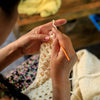
Why Handcrafted Clothing Matters in a Fast-Fashion World

Quick Listen:
The fashion industry races ahead on a model of constant novelty: fresh collections arrive almost weekly, prices remain accessible, and garments often last mere months before being replaced. This velocity exacts a heavy toll. Production drives massive resource use and pollution dyeing alone contributes heavily to industrial water contamination, while the sector's carbon footprint rivals or exceeds that of international aviation and shipping in many estimates. Globally, around 92 million tonnes of textile waste accumulate each year, equivalent to a truckload of discarded clothing dumped every second.
In wealthier economies, the average person sheds roughly 95 pounds of textiles annually, feeding landfills with billions of unworn items. Yet a countercurrent builds momentum. Handcrafted clothing, born from artisan's hands and time-honored methods, prioritizes depth over haste. These pieces carry stories of heritage, regional skill, and deliberate creation, appealing to those weary of disposability. Curated digital platforms now connect makers directly to buyers worldwide, sustaining this revival in key markets including India, the United States, the United Kingdom, Singapore, Australia, and the United Arab Emirates.
Fast fashion erodes cultural heritage, sidelining artisans and reducing traditions to trends. At IndieHaat, we champion India's craftspeople with handcrafted sarees, apparel, décor, and skincare rooted in authenticity. Each piece embodies skill and ethical care. Support artisans and preserve India's timeless legacy Shop Now!
From Speed to Substance: Why Consumers Are Re-evaluating What They Wear
Fast fashion's environmental burden dominates discussions. The clothing industry, valued at USD 1.3 trillion and employing over 300 million people, has seen fiber production nearly double from 58 million tonnes in 2000 to 116 million tonnes in 2022, with projections reaching 147 million tonnes by 2030 under current patterns. Shoppers bought 60% more garments in 2014 than in 2000, yet kept them only half as long. The sector ranks as the second-largest consumer of water and contributes 2-8% of global carbon emissions, with some analyses placing it around 10% surpassing combined emissions from flights and maritime transport. Over 85% of textiles end up discarded annually, and laundry releases vast microplastics into oceans.
Awareness spreads in digitally mature, eco-attuned regions. In the United States, the sustainable fashion and circular economy market reached USD 115 billion in 2024, propelled by consumer preference for eco-conscious brands and legislation like the 2023 Fashion Sustainability and Social Accountability Act requiring impact disclosures. University and market research in the US and Singapore reveals growing appetite for ethical choices. UK and Australian policy documents stress circularity to curb waste through better traceability. India supports vast artisan networks via government handloom programs, preserving livelihoods for millions, often women in rural areas.
This reconsideration resonates strongest where climate and fairness concerns intersect with purchasing power. Handcrafted apparel stands apart by highlighting individual makers, small-batch runs, and inherited crafts offering authenticity against fast fashion's uniformity.
How Craft Is Becoming a Modern Fashion Signal
Craft shifts from marginal to intentional choice. In India, state-backed efforts and studies on artisan economic resilience fuel handloom resurgence, with domestic online channels boosting demand for distinctive regional fabrics.
The US and UK monitor rising interest in slow fashion via industry groups garments with verifiable origins, fair labor, and longevity attract those rejecting fleeting trends. Premium pricing gains traction among buyers valuing durability.
Singapore and the UAE attract affluent, narrative-seeking consumers, including expatriates, who favor exclusive, heritage-linked artisan items that align with luxury and responsibility. Australia ties handcrafted materials to national ethical and waste-reduction policies, informed by academic and official research.
The broader handicrafts sector, estimated at USD 739.95 billion in 2024, heads toward USD 983.12 billion by 2030 at a 4.9% CAGR, with Asia Pacific commanding 34.81% share. Sustainable niches accelerate faster, signaling wider embrace.
Beyond Aesthetics: The Real Value of Artisan Apparel
Handcrafted pieces transcend appearance. Economically, they bolster fragile communities. India's artisan base, heavily female and rural, benefits from targeted programs maintaining income streams.
Culturally, techniques like specialized weaving, natural dyeing, and intricate embroidery risk vanishing absent viable markets documented by scholars in India and Australia.
Buyers reward transparency. Studies in the US and Singapore show elevated trust, perceived genuineness, and repeat loyalty toward traceable, artisan-origin goods compared to factory outputs.
How Handcrafted Clothing Works in a Digital-First Economy
Online infrastructure revolutionizes reach. Indian cooperatives access international customers while safeguarding cultural markers. UK and US independent labels source Indian handlooms to satisfy ethical criteria.
Demand swells in Singapore and the UAE for story-infused, limited pieces among discerning buyers. Australian ethical outlets collaborate with artisan networks under sustainability guidelines. Specialized platforms streamline discovery, secure transactions, and manage cross-border delivery preserving integrity throughout.
Where Craft Still Struggles Against Scale
Obstacles remain. In India, scaling production risks diluting authenticity amid capacity constraints. UK and US research notes friction between ethical aspirations and affordability.
Handmade variability challenges uniformity, per insights from Singapore and Australia. Digital adoption barriers persist for some Indian artisans. Solutions require careful innovation growth that honors origins.
Why Handcrafted Fashion Makes Business Sense
Viability persists despite barriers. US and UK consumers accept higher prices for credible ethics. Indian exports find eager markets in the UAE, UK, and US.
Marketplaces lower entry hurdles for small-scale producers, according to Singapore and Australia analyses. Genuine storytelling fosters loyalty and standout positioning in the UAE and UK.
Digitizing Craft Without Diluting Its Soul
Thoughtfully designed platforms maintain maker credit and regional character while opening global pathways across these territories. They merge intuitive digital experiences with handmade constraints, backed by evidence on supporting micro-producers.
What Industry Leaders and Researchers Expect Next
Forward views point to sustained growth. Indian expertise underscores craft's sustainability role. UK and Australian frameworks promote circularity. US and Singapore tracking reveals expanding mindful buying.
Handcrafted clothing positions itself as a direct answer to fast-fashion exhaustion not a sideline, but core to future commerce. Curated artisan channels will guide the path toward slower, more considered, deeply human fashion. In an era hungry for meaning, the patient labor of skilled hands may well define the most lasting style.
Frequently Asked Questions
Why is handcrafted clothing better than fast fashion for the environment?
Handcrafted clothing significantly reduces environmental impact compared to fast fashion's massive resource consumption and pollution. The fashion industry produces 92 million tonnes of textile waste annually and contributes 2-8% of global carbon emissions, while handcrafted pieces prioritize small-batch production, natural materials, and longevity over disposability. By choosing artisan-made garments, consumers support sustainable practices that avoid the water contamination, microplastic pollution, and waste associated with mass-produced clothing.
How does buying handcrafted clothing support artisan communities?
Purchasing handcrafted apparel directly bolsters fragile communities, particularly in regions like India where millions of artisans often women in rural areas depend on traditional textile crafts for their livelihoods. These purchases help preserve heritage techniques like specialized weaving, natural dyeing, and intricate embroidery that risk disappearing without viable markets. Through online platforms and curated marketplaces, buyers can connect directly with makers, ensuring fair compensation and economic resilience for artisan networks worldwide.
Is handcrafted clothing worth the higher price compared to fast fashion?
Yes, handcrafted clothing offers superior long-term value despite higher upfront costs. These garments feature exceptional durability, unique craftsmanship, and timeless designs that outlast fast fashion items, which are typically worn only half as long as garments from 2000. Consumers in the US, UK, and other markets increasingly accept premium pricing for pieces with verifiable origins, ethical production, and authentic storytelling making handcrafted apparel a worthwhile investment for those seeking quality, sustainability, and cultural preservation over disposable trends.
Disclaimer: The above helpful resources content contains personal opinions and experiences. The information provided is for general knowledge and does not constitute professional advice.
You may also be interested in: Why Handmade Still Matters in an Age of Mass-Produced Fashion
Fast fashion erodes cultural heritage, sidelining artisans and reducing traditions to trends. At IndieHaat, we champion India's craftspeople with handcrafted sarees, apparel, décor, and skincare rooted in authenticity. Each piece embodies skill and ethical care. Support artisans and preserve India's timeless legacy Shop Now!
Powered by flareAI.co