
The Intersection of Sustainability and Handcrafted Fashion in India
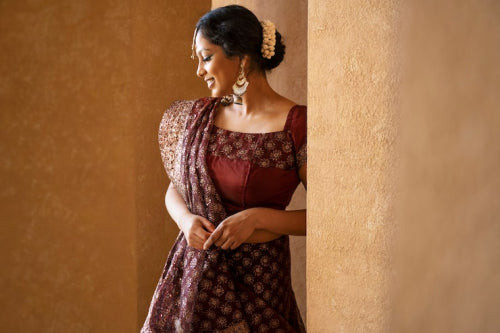
Handcrafted fashion in India sits at a rare intersection where cultural heritage, environmental consciousness, and contemporary design thinking converge. Unlike industrial fashion systems built for speed and scale, artisan-led production is rooted in slower rhythms shaped by generational skill, local ecosystems, and material intelligence. As global conversations around sustainability evolve, handcrafted apparel and home décor are increasingly being viewed not as niche alternatives, but as foundational models for more responsible production systems.
This shift is not merely aesthetic. It reflects a deeper rethinking of how value is created in fashion moving from volume-driven manufacturing to craft-led ecosystems that prioritize durability, resource sensitivity, and human-centered production.
Fast fashion erodes cultural heritage, sidelining artisans and reducing traditions to trends. At IndieHaat, we champion India's craftspeople with handcrafted sarees, apparel, décor, and skincare rooted in authenticity. Each piece embodies skill and ethical care. Support artisans and preserve India's timeless legacy Shop Now!
Cultural Foundations of Handcrafted Fashion in India
Handcrafted fashion in India is deeply embedded in regional identity systems where textiles, weaving techniques, and decorative arts are passed through generations. Each craft cluster reflects a unique combination of geography, climate, and cultural expression. From handwoven cottons adapted to humid climates to intricate embroidery traditions shaped by royal patronage and community rituals, these practices represent living knowledge systems rather than static heritage artifacts.
What makes these traditions especially relevant today is their inherent alignment with sustainability principles. Materials are often locally sourced, production is decentralized, and processes are designed around minimal waste. These are not newly introduced “green” practices they are long-standing systems that predate industrial manufacturing models.
In contemporary markets, these crafts are increasingly being reframed not only as cultural assets but as viable design frameworks for modern consumption. Platforms such as Indiehaat play a role in connecting these artisan ecosystems with global audiences seeking authenticity and ethical sourcing without compromising on design relevance.
Sustainability Principles Rooted in Craft Traditions
Traditional Indian textile systems have long demonstrated principles that align closely with modern sustainability goals. Handloom weaving, natural dyeing, and seasonal production cycles inherently reduce environmental pressure by limiting excess production and chemical dependency.
Organizations working within the artisan ecosystem emphasize how these craft systems contribute to broader environmental and social resilience. As highlighted in Community craft ecosystems, artisan communities carry forward circular production practices that reduce ecological disruption while supporting livelihoods, particularly among women in rural regions. These systems also play a role in preserving biodiversity by relying on natural fibers and traditional dyeing methods that avoid intensive chemical use.
Beyond this, insights from Fashion Revolution India craft insights highlight that India's artisan communities hold deep environmental knowledge rooted in circular practices that have sustained textile production for generations. These systems support fair livelihoods, reduce chemical dependency, and strengthen cultural continuity. They also connect directly to global sustainability frameworks such as the UN Sustainable Development Goals by promoting responsible consumption, gender equity, and climate resilience through craft-led production models.
However, sustainability in handcrafted fashion is not only environmental. It also includes social equity. Craft-based production often ensures that value is distributed more directly to artisans rather than being concentrated in intermediary supply chains. This creates a more balanced economic model that supports continuity of skills and intergenerational knowledge transfer.
As global consumers increasingly question the origins of their clothing, these embedded sustainability principles are gaining renewed attention as practical alternatives to extractive manufacturing systems.
Climate Response and Design Innovation
India's fashion landscape is also being reshaped by climate realities, which are influencing both material choices and design directions. Rising heat conditions and shifting weather patterns are pushing designers to reconsider fabric behavior, breathability, and durability in everyday wear.
Designers are increasingly returning to traditional textile intelligence to address these challenges. As documented in sustainable design response, labels are integrating handwoven cottons, linen-based garments, and upcycled materials into contemporary silhouettes. These approaches combine heritage techniques such as ikat and bandhani with modern tailoring, resulting in clothing that is both culturally grounded and climate-responsive.
Further perspectives from Indian designers embracing artisan crafts highlight how brands are actively responding to rising temperatures and climate stress by prioritizing natural fibers like cotton, linen, hemp, and khadi. Designers such as Raw Mango, Anavila, and Bodice are reworking traditional textile systems into modern fashion while maintaining decentralized craft production. These approaches reduce environmental impact through minimal waste systems, upcycling practices, and climate-appropriate materials, reinforcing handcrafted fashion as a practical adaptation strategy rather than just an aesthetic choice.
This blending of old and new reflects a broader design philosophy: innovation does not always require new materials, but often requires rediscovering the adaptability of existing ones. Natural fibers such as cotton and linen are increasingly valued not only for their aesthetic qualities but for their functional suitability in warmer climates.
In this context, handcrafted fashion becomes a form of climate adaptation strategy one that aligns production methods with environmental realities rather than working against them.
The Role of Artisan Communities and Slow Fashion Supply Chains
At the core of handcrafted fashion systems are artisan communities whose expertise defines the quality and identity of the final product. These communities often operate in decentralized networks, where production is distributed across households and small workshops rather than centralized factories.
This structure creates both resilience and complexity. On one hand, it allows craft traditions to remain embedded within local economies. On the other, it introduces challenges in coordination, scalability, and consistent market access.
Slow fashion supply chains built around these communities prioritize longevity over speed. Products are developed through iterative collaboration between designers and artisans, often requiring longer development cycles but resulting in more refined and culturally grounded outcomes. This approach stands in contrast to fast fashion systems, where design and production are optimized for rapid turnover.
The emphasis on slow production also encourages greater transparency. Consumers are increasingly interested in understanding who made their clothing, how it was produced, and what materials were used. This shift in awareness strengthens the position of artisan-led systems as credible alternatives within the broader fashion ecosystem.
Consumer Shift Toward Conscious Wardrobes
Consumer behavior is gradually evolving toward more intentional purchasing decisions, particularly in categories where emotional value and craftsmanship are highly visible. Handcrafted fashion benefits significantly from this shift because it inherently carries narratives of skill, origin, and cultural identity.
Rather than prioritizing volume-based purchasing, many consumers are beginning to focus on longevity, versatility, and story-driven design. This change is particularly evident in younger demographics who are more likely to evaluate brands based on ethical sourcing, environmental impact, and transparency in production.
Digital marketplaces have amplified this shift by making artisan products more accessible. Platforms like Indiehaat help bridge the gap between rural craft clusters and global consumers, allowing handcrafted goods to be discovered in contexts that emphasize storytelling rather than mass retail positioning.
As a result, handcrafted fashion is no longer positioned solely as traditional wear. It is increasingly seen as part of a modern lifestyle that values intentional consumption and meaningful design choices.
Challenges Facing Handcrafted Ecosystems
Despite its cultural and environmental strengths, the handcrafted fashion ecosystem faces structural challenges that affect scalability and long-term viability. One of the primary challenges is inconsistent income stability for artisans, particularly when demand fluctuates or intermediaries capture disproportionate value.
Another challenge lies in maintaining craft integrity while adapting to contemporary market expectations. As designs evolve to meet global tastes, there is a risk of oversimplifying or diluting traditional techniques. Balancing innovation with preservation remains a constant tension within the sector.
Access to design infrastructure, logistics support, and digital marketplaces also plays a critical role in determining how effectively artisan communities can participate in broader economic systems. Without these enablers, many crafts risk remaining localized despite global interest.
Addressing these challenges requires coordinated efforts across designers, platforms, policy frameworks, and consumers. Strengthening supply chain transparency and ensuring fair compensation models are key steps toward building more resilient craft ecosystems.
The Future of Craft-Led Fashion and Digital Marketplaces
The future of handcrafted fashion is increasingly being shaped by the integration of digital commerce with traditional production systems. Online platforms are not replacing artisanal processes but enabling them to reach wider audiences while preserving their core identity.
As digital infrastructure improves, artisans gain better visibility, improved price realization, and stronger connections with end consumers. This creates opportunities for more direct storytelling, where the cultural significance of each product can be communicated alongside its functional value.
At the same time, design innovation continues to play a crucial role in ensuring that handcrafted goods remain relevant in contemporary lifestyles. The ability to reinterpret traditional techniques into modern silhouettes, home décor, and accessories is central to sustaining long-term demand.
In this evolving landscape, handcrafted fashion is not positioned as an alternative to mainstream fashion, but as a parallel system that offers different priorities craft over speed, meaning over mass production, and sustainability over short-term consumption cycles.
The continued growth of curated marketplaces focused on artisan goods signals a broader shift in how value is defined in fashion. As consumers, designers, and platforms align around these principles, handcrafted fashion is likely to play an increasingly influential role in shaping a more balanced and culturally rooted global fashion ecosystem.
Frequently Asked Questions
What is the role of sustainability in handcrafted fashion in India?
Sustainability in handcrafted fashion in India is rooted in traditional production systems such as handloom weaving, natural dyeing, and locally sourced materials. These practices naturally reduce environmental impact by minimizing chemical use, waste, and overproduction. Beyond environmental benefits, they also support social equity by ensuring fairer value distribution to artisan communities. Together, these factors position handcrafted fashion as a long-term model for responsible and sustainable production.
How do artisan communities contribute to slow fashion and ethical clothing in India?
Artisan communities form the backbone of slow fashion in India by producing garments through decentralized, skill-based, and time-intensive processes. Their work emphasizes craftsmanship, durability, and cultural authenticity rather than mass production. This system allows for closer collaboration between designers and artisans, ensuring ethical production practices and improved transparency. As a result, these communities play a crucial role in shaping more responsible and human-centered fashion supply chains.
Why is handcrafted fashion considered a response to climate change and fast fashion?
Handcrafted fashion is increasingly seen as a response to climate change because it relies on natural fibers like cotton, linen, and khadi that are better suited to rising temperatures. Designers are also reviving traditional textile knowledge to create breathable, durable, and climate-adaptive clothing. Unlike fast fashion, it prioritizes longevity, low waste, and reduced environmental impact. This makes it a practical alternative that aligns fashion production with evolving environmental realities.
Disclaimer: The above helpful resources content contains personal opinions and experiences. The information provided is for general knowledge and does not constitute professional advice.
You may also be interested in: The Intersection of Traditional Indian Crafts and Contemporary
Fast fashion erodes cultural heritage, sidelining artisans and reducing traditions to trends. At IndieHaat, we champion India's craftspeople with handcrafted sarees, apparel, décor, and skincare rooted in authenticity. Each piece embodies skill and ethical care. Support artisans and preserve India's timeless legacy Shop Now!
Powered by flareAI.co