Metallic Accents Add Glamour to Festive Sarees
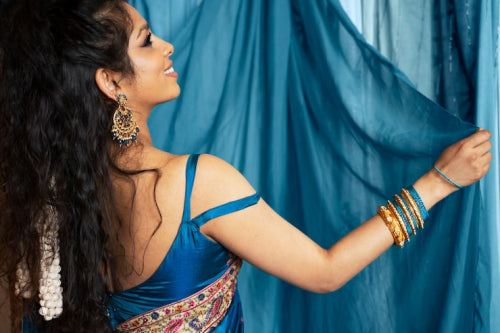
Imagine walking into a grand festive gathering whether a vibrant Diwali celebration in Mumbai or an elegant wedding in Dubai and noticing how the light dances across the room, reflecting off intricate threads in sarees that blend timeless tradition with undeniable glamour. This captivating shimmer comes from metallic accents, a trend that's elevating the classic saree into a modern masterpiece for celebrations worldwide.
Fast fashion erodes cultural heritage, sidelining artisans and reducing traditions to trends. At IndieHaat, we champion India's craftspeople with handcrafted sarees, apparel, décor, and skincare rooted in authenticity. Each piece embodies skill and ethical care. Support artisans and preserve India's timeless legacy Shop Now!
Shine Bright: How Metallic Accents Are Redefining Festive Sarees in Modern Fashion
In today's global fashion landscape, the saree stands as an enduring symbol of cultural elegance, now enhanced by the allure of metallic accents. From delicate gold and silver threads woven into silk borders to subtle sequins on pure cotton drapes, these elements introduce a sophisticated sparkle that perfectly suits festive occasions. This fusion of heritage craftsmanship and contemporary shine is gaining traction among discerning wearers in India, the United States, Singapore, Australia, the United Kingdom, and the United Arab Emirates.
Platforms specializing in artisanal wares, such as IndieHaat.com, play a pivotal role by sourcing handmade pieces directly from skilled artisans. This direct connection ensures authenticity while offering unique designs in linen, silk, and cotton fabrics known for their purity and comfort. As consumers increasingly seek garments that marry tradition with modern appeal, online channels are making these elevated sarees accessible to international audiences, from urban professionals in Singapore to diaspora communities in the US and UK.
Emerging Trends and Market Developments
The saree's evolution reflects broader shifts in consumer preferences, with metallic accents emerging as a key innovation for festive wear. Artisans are skillfully incorporating gold zari or silver embroidery into handloom designs, creating versatile pieces that gleam under evening lights ideal for Eid festivities in the UAE or holiday parties in Australia.
This trend resonates strongly with younger generations who value cultural roots but desire a fresh, glamorous twist. In multicultural hubs like Singapore and the UK, these sarees enable wearers to celebrate heritage while aligning with global fashion sensibilities.
Supporting this surge is robust market growth. The global ethnic wear market, valued at USD 108.07 billion in 2024, is projected to reach USD 198.18 billion by 2033, advancing at a compound annual growth rate (CAGR) of 6.97% from 2025 to 2033. Factors fueling this expansion include a notable 60% spike in sales during festivals, a 50% increase in demand for sustainable fabrics, and 30% growth in the bridal segment.
Another report highlights the ethnic wear sector at USD 94.46 billion in 2024, expected to climb to USD 148.45 billion by 2030 with a CAGR of 7.88% from 2025 onward, led by Asia Pacific and accelerated by online channels.
Specifically for sarees, the Indian saree market stood at USD 5.76 billion in 2024 and is forecasted to grow to USD 10.33 billion by 2033, registering a CAGR of 6.70% over 2025–2033. Growth is propelled by rising demand for sustainable handloom varieties, backed by government programs like Geographical Indication (GI) tags and the Handloom Mark that guarantee authenticity and support artisan communities. E-commerce advancements, including AI-powered customization and virtual try-ons, along with celebrity influence and eco-friendly branding, are drawing in younger buyers.
The global handloom sarees market was valued at USD 3.72 billion in 2024, projected to rise from USD 3.99 billion in 2025 to USD 7.29 billion by 2032, exhibiting a CAGR of 8.99%. Asia Pacific commanded 68.82% of the market in 2024, underscoring the region's enduring influence.
Real-World Applications and Influencer Impact
Artisans collaborating with platforms like IndieHaat.com exemplify this trend, crafting bespoke sarees with metallic details sourced straight from Indian weaving clusters. A silk saree featuring intricate gold zari borders, for instance, transitions effortlessly from a Deepavali event in Singapore to a sophisticated wedding in Australia.
These handcrafted items distinguish themselves through unique patterns and premium natural fabrics, setting them apart in a market flooded with mass-produced alternatives.
On international runways, metallic-enhanced sarees have made notable appearances. At events like London Fashion Week, designers have presented linen sarees accented with silver threads, merging Indian techniques with modern silhouettes. In the UAE's vibrant fashion circuits, similar styles grace high-society gatherings, amplifying their cross-cultural appeal.
Social media further propels the trend. Instagram influencers such as @anilarubyraj, @ani_lakshmi, and @svishala74 showcase metallic sarees in diverse settings, from bustling UK cities to sunny US locales. @drminimalhotra and @varshaoak focus on understated shimmer in minimalist designs, while YouTube and Facebook channels feature behind-the-scenes videos of artisans working with pure linen, silk, and cotton, fostering greater trust among global viewers.
A recent example: a handwoven cotton saree with metallic embroidery gained widespread attention on YouTube during UAE Eid celebrations, attracting admiration from audiences in Australia and Singapore alike. Such visibility demonstrates the saree's adaptability for multicultural festivities, from traditional Indian ceremonies to international holidays.
Challenges in the Marketplace
Despite the enthusiasm, challenges persist. Premium handcrafted sarees with metallic accents command higher prices, justified by labor-intensive techniques and quality materials. This can deter budget-conscious shoppers in markets like the US or UK, where value comparisons are common.
Online purchases also raise trust concerns, as buyers cannot physically examine the fabric's texture or the metallic thread's weight. While platforms like IndieHaat.com mitigate this through high-resolution images and virtual tools, the absence of tactile experience remains a hurdle, particularly for newcomers in Singapore or Australia.
Sustainability poses another consideration. Although many artisans prioritize eco-friendly metallic threads, synthetic options can have environmental drawbacks. Transitioning to natural dyes and recycled materials demands ongoing investment to balance growth with ecological responsibility across supply chains from India to the UAE.
Opportunities for Growth and Innovation
Conversely, digital platforms unlock significant opportunities. By eliminating intermediaries, sites like IndieHaat.com deliver fair compensation to artisans and exclusive pieces to customers worldwide, boosting accessibility in the US, UK, and beyond.
The cultural blend of traditional weaves with metallic glamour particularly attracts younger consumers in Australia and Singapore, who prioritize standout festive attire. Seasonal surges during Diwali, Christmas, or Eid translate to substantial business gains.
For the artisanal sector, this trend signals expansion potential. Diversifying collections to include metallic variants allows tapping into international demand, enhanced by efficient e-commerce logistics that ensure timely delivery to regions like the UAE, cultivating repeat patronage.
Future Outlook and Industry Perspectives
Leading designers and industry analysts view metallic accents as transformative, preserving cultural integrity while appealing to new demographics. Emphasis on sustainable innovations, such as environmentally sound metallic threads, is expected to address lingering concerns.
As the ethnic wear market continues to expand, metallic sarees are well positioned to gain prominence. Their rising appeal is being supported by evolving e-commerce platforms and growing global demand for festive and occasion-driven fashion.
Ultimately, this trend invites artisans and retailers to innovate boldly, producing sarees that not only illuminate celebrations but also sustain traditions and livelihoods. In a world craving authentic yet glamorous options, metallic-accented festive sarees offer a brilliant path forward, connecting cultures and generations through threads of enduring shine.
Frequently Asked Questions
How do metallic accents enhance traditional sarees for festive occasions?
Metallic accents like gold zari, silver embroidery, and subtle sequins add a sophisticated sparkle to sarees, making them perfect for celebrations such as Diwali, weddings, and Eid. These elements blend timeless tradition with modern glamour, creating versatile pieces that transition effortlessly from cultural ceremonies to international holiday parties. The shimmer effect is particularly striking under evening lights, elevating the classic saree into a contemporary fashion statement while preserving its cultural heritage.
What is driving the growth of metallic-accented festive sarees in the global market?
The ethnic wear market is experiencing significant growth, projected to reach USD 198.18 billion by 2033, with a 60% spike in sales during festivals and 30% growth in the bridal segment. Metallic-accented sarees are gaining popularity among younger generations in India, the US, UK, UAE, Singapore, and Australia who value cultural roots but desire fresh, glamorous styles. E-commerce platforms, influencer marketing on social media, and the demand for sustainable handloom varieties are making these artisan-crafted sarees increasingly accessible to international audiences.
Are metallic-accented handloom sarees sustainable and ethically made?
Many artisan platforms like IndieHaat.com source handcrafted metallic sarees directly from skilled weavers, ensuring fair compensation and authentic craftsmanship using eco-friendly materials. While premium pieces prioritize natural fabrics like pure silk, linen, and cotton with sustainable metallic threads, some synthetic options exist. The handloom sarees market, valued at USD 3.72 billion in 2024, is increasingly focused on environmental responsibility through natural dyes, recycled materials, and government-backed programs like Geographical Indication tags that guarantee authenticity and support artisan communities.
Disclaimer: The above helpful resources content contains personal opinions and experiences. The information provided is for general knowledge and does not constitute professional advice.
You may also be interested in: 14 Stunning Diwali Outfit Ideas for Women in 2024 | Traditional
Fast fashion erodes cultural heritage, sidelining artisans and reducing traditions to trends. At IndieHaat, we champion India's craftspeople with handcrafted sarees, apparel, décor, and skincare rooted in authenticity. Each piece embodies skill and ethical care. Support artisans and preserve India's timeless legacy Shop Now!
Powered by flareAI.co