
Exploring the Role of Handcrafted Home Decor in Sustainable Interior Design
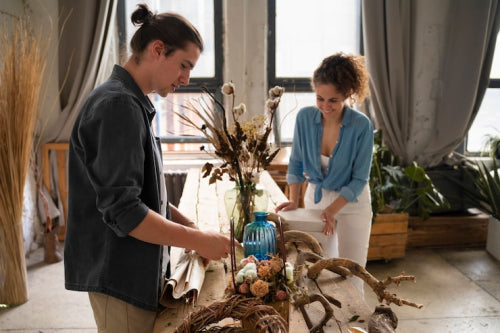
In an era dominated by mass production, there's a quiet revolution brewing in home decor one that prioritizes authenticity, sustainability, and the human touch. Picture a handwoven silk throw draped over your sofa, its intricate patterns whispering tales of artisans who've spent years perfecting their craft. This is the essence of handcrafted home decor, a movement that transcends mere aesthetics to embody ethical consumption and cultural connection. For IndieHaat, this philosophy drives their mission to deliver artisan-crafted treasures to homes in India, the US, Singapore, Australia, the UK, and the UAE, transforming spaces into stories of heritage and care.
Fast fashion erodes cultural heritage, sidelining artisans and reducing traditions to trends. At IndieHaat, we champion India's craftspeople with handcrafted sarees, apparel, décor, and skincare rooted in authenticity. Each piece embodies skill and ethical care. Support artisans and preserve India's timeless legacy Shop Now!
The Surge of Sustainable Home Decor
The demand for sustainable home decor is reshaping how we design our living spaces. A recent report highlights that the global sustainable home decor market, valued at $331.0 billion in 2021, is expected to soar to $556.3 billion by 2031, with a steady 5.5% compound annual growth rate from 2022 to 2031. Sustainable decor blends beauty with functionality, encompassing everything from furniture to floor coverings like tiles, wood, laminates, carpets, and rugs, as well as textiles for beds, baths, kitchens, and living rooms. These items, whether machine-made or handcrafted, reflect a growing consumer preference for eco-conscious choices. While countries like the US, Canada, and Germany lead in adoption, emerging markets such as India, China, and Brazil are seeing a steady rise in demand, driven by a burgeoning middle class eager for sustainable elegance.
What sets handcrafted decor apart is its soul. Unlike factory-produced goods, each piece bears the unique imprint of its creator. IndieHaat champions this by sourcing directly from artisans, using only pure, eco-friendly fabrics like linen, silk, and cotton. These materials aren't just luxurious; they're a deliberate choice to minimize environmental harm, offering a sustainable alternative to synthetic textiles that clog landfills. For consumers, this means a chance to own decor that's as meaningful as it is beautiful, a tangible link to a craftsman's dedication.
A Global Tapestry of Craftsmanship
IndieHaat's market spans six diverse regions: India, the US, Singapore, Australia, the UK, and the UAE. Each brings its own cultural lens, yet all share a reverence for craftsmanship that feels personal. In India, where textiles are a cultural cornerstone, buyers might cherish a block-printed cotton bedspread, its patterns echoing centuries-old traditions. In the UAE, where modernity meets luxury, a handwoven silk runner could elevate a sleek penthouse. IndieHaat's unique designs, rooted in artisanal heritage, cater to this global appetite for individuality, making every piece a statement of cultural pride and personal style.
Social media is the bridge that connects these far-flung markets. Platforms like Instagram, Facebook, and YouTube serve as virtual galleries for IndieHaat's offerings. A scroll through anilarubyraj reveals the rhythmic clatter of looms, while svishala74 showcases the delicate stitching of a table runner. These posts do more than display products they tell stories, transforming items into heirlooms. By sharing the artisan's process, IndieHaat fosters a sense of intimacy, inviting customers to feel part of a larger creative journey.
This digital storytelling is critical in markets like Singapore and Australia, where eco-conscious consumers value transparency. In the US, where convenience often dominates, these glimpses into craftsmanship resonate with those seeking decor with depth. IndieHaat's presence on platforms like ani_lakshmi ensures that every post, from a vibrant rug to a minimalist cushion, feels like an invitation to join a movement that celebrates human skill over mass production.
Addressing Consumer Hesitations
Selling handcrafted decor online comes with hurdles. Customers often cite high prices, the inability to touch products, and concerns about authenticity as barriers. These are legitimate concerns handcrafted items command premium prices due to the time, skill, and care invested. IndieHaat tackles this by cutting out middlemen, ensuring artisans are fairly compensated while keeping costs reasonable. Through platforms like drminimalhotra, they share videos of the creation process, from spinning raw cotton to dyeing silk, helping buyers appreciate the value behind the price.
The tactile challenge how to convey texture through a screen is trickier. IndieHaat counters this with vivid descriptions and high-quality visuals. On varshaoak, a linen curtain is described as “soft yet sturdy, catching the light with a gentle sheen,” while a cotton rug is praised for its “firm yet forgiving weave underfoot.” Customer reviews, shared across social media, act as a trust anchor, offering real-world proof of quality. By emphasizing transparency and storytelling, IndieHaat builds confidence, turning skeptics into loyal buyers.
Redefining Luxury Through Sustainability
Handcrafted decor is more than a design choice; it's a redefinition of luxury. In an age when fast furniture fuels environmental waste, choosing artisan-made pieces is a bold statement. IndieHaat's commitment to linen, silk, and cotton aligns with the sustainable decor movement, which favors biodegradable materials with minimal ecological impact. A silk pillowcase isn't just a treat for the senses; it's a vote for ethical production over the churn of mass manufacturing. This resonates in markets like Singapore and Australia, where sustainability is a priority, and even in the US, where consumers are increasingly drawn to decor with a story.
IndieHaat's designs stand out for their uniqueness, each piece a testament to an artisan's skill. A handwoven rug isn't merely functional it's a work of art, grounding a room in history and humanity. This individuality contrasts sharply with the uniformity of big-box retailers, appealing to those who want their homes to reflect their values. By prioritizing authentic craftsmanship, IndieHaat offers a vision of luxury that's sustainable, personal, and profoundly meaningful.
The Future of Handcrafted Decor
The rise of sustainable home decor reflects a broader shift in consumer consciousness. As the market grows toward that projected $556.3 billion by 2031, brands like IndieHaat are leading the charge, proving that beauty and responsibility can coexist. Their focus on direct artisan partnerships ensures that every purchase supports a craftsperson's livelihood, preserving traditions that might otherwise fade. This is particularly poignant in India, where textile arts are a cultural lifeline, but it's equally relevant in the UK or UAE, where consumers seek decor that stands out in a sea of sameness.
Yet, the challenge remains: how to scale this vision without losing its soul. IndieHaat's answer lies in technology and transparency. By leveraging social media to share artisan's stories and using e-commerce to reach global markets, they maintain the intimacy of handcrafted goods while meeting modern demands. This balance is what makes their model so compelling a blend of tradition and innovation that speaks to today's eco-conscious, culturally curious consumer.
A Legacy Woven by Hand
As we reimagine our homes, handcrafted decor offers a path to spaces that are sustainable, soulful, and uniquely ours. IndieHaat isn't just a brand; it's a movement, connecting artisans with consumers across continents. The global sustainable home decor market may be on track to reach $556.3 billion by 2031, but its true value lies in the stories stitched into every piece. Whether you're browsing ani_lakshmi or eyeing a cotton throw for your living room, you're not just decorating you're preserving a legacy, one handwoven thread at a time.
Frequently Asked Questions
What makes handcrafted home decor more sustainable than mass-produced alternatives?
Handcrafted home decor prioritizes eco-friendly materials like linen, silk, and cotton, which are biodegradable and minimize environmental harm compared to synthetic textiles that contribute to landfill waste. Each piece is made by artisans using traditional techniques that require less industrial energy and chemical processing than factory production. By choosing handcrafted items, consumers support ethical production methods that favor quality and longevity over the wasteful churn of fast furniture and mass manufacturing.
How is the global sustainable home decor market expected to grow in the coming years?
The global sustainable home decor market, valued at $331.0 billion in 2021, is projected to reach $556.3 billion by 2031, growing at a steady 5.5% compound annual growth rate. While developed countries like the US, Canada, and Germany currently lead in adoption, emerging markets such as India, China, and Brazil are experiencing rising demand driven by a growing middle class seeking eco-conscious and elegant design choices. This growth reflects a broader shift in consumer consciousness toward sustainable living and ethical consumption.
What are the main challenges when buying handcrafted decor online and how can they be addressed?
The primary challenges include higher prices compared to mass-produced items, the inability to physically touch and feel products before purchase, and concerns about authenticity. These barriers can be overcome through transparent storytelling that showcases the artisan creation process, detailed product descriptions with high-quality visuals that convey texture and craftsmanship, and customer reviews that provide real-world proof of quality. Direct-to-consumer models that eliminate middlemen also help keep prices reasonable while ensuring artisans receive fair compensation.
Disclaimer: The above helpful resources content contains personal opinions and experiences. The information provided is for general knowledge and does not constitute professional advice.
You may also be interested in: Qualities of Silk in Textile Production – Indiehaat.com
Fast fashion erodes cultural heritage, sidelining artisans and reducing traditions to trends. At IndieHaat, we champion India's craftspeople with handcrafted sarees, apparel, décor, and skincare rooted in authenticity. Each piece embodies skill and ethical care. Support artisans and preserve India's timeless legacy Shop Now!
Powered by flareAI.co