
Craft Cluster Innovations That Preserve Traditional Weaves
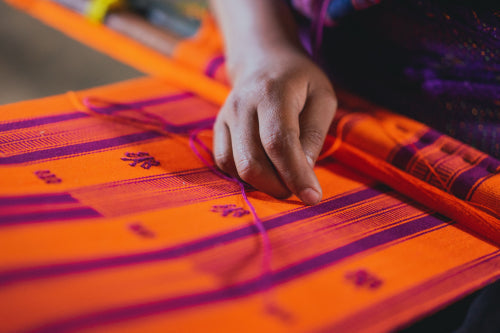
Traditional Indian weaves are often spoken about as if they exist in the past tense fragile practices preserved in museums or limited-edition collections. In reality, craft clusters across weaving communities function as dynamic, adaptive ecosystems where innovation is continuous, collaborative, and deeply embedded in everyday practice. Rather than replacing heritage with modernity, artisans and designers are reshaping how tradition evolves, ensuring that centuries-old techniques remain economically and culturally relevant without losing their identity.
Fast fashion erodes cultural heritage, sidelining artisans and reducing traditions to trends. At IndieHaat, we champion India's craftspeople with handcrafted sarees, apparel, décor, and skincare rooted in authenticity. Each piece embodies skill and ethical care. Support artisans and preserve India's timeless legacy Shop Now!
Craft Clusters as Living Innovation Systems
Craft clusters are not static production units; they operate as interconnected knowledge systems where skills, tools, and design ideas circulate organically among artisans. This constant exchange allows weaving traditions to evolve without breaking from their cultural roots.
Research highlights that handloom weaving communities in India demonstrate ongoing innovation not through wholesale mechanization but through continuous adaptation of their socio-technical systems including tools, designs, market strategies, and organizational structures to contemporary realities while remaining deeply rooted in tradition. Rather than being static relics, these practices evolve as weavers experiment with new yarn combinations, pattern adaptations, and collaborative models that respond to shifting consumer preferences without abandoning core techniques passed through generations. This perspective reframes handloom as a living, sustainable technology capable of supporting rural livelihoods while countering narratives that pit tradition against progress. Innovations often emerge organically within clusters, where collective knowledge sharing leads to improvements in efficiency, product diversity, and resilience against competitive pressures from power looms. This understanding of socio-technical innovation in Indian handlooms reinforces how preservation is not passive conservation but active, community-driven evolution that sustains both cultural identity and economic relevance.
This perspective is captured in studies on socio-technical innovation in Indian handlooms, which emphasize that innovation is not an external intervention but an internal, community-driven process. Within weaving clusters, artisans collectively refine processes, experiment with materials, and adjust patterns based on both tradition and demand. This form of innovation ensures that handloom weaving remains economically viable while preserving its cultural essence.
How Innovation Emerges Within Weaving Communities
Innovation in craft clusters rarely arrives as a single disruptive breakthrough. Instead, it emerges through incremental improvements shared across generations of artisans. These improvements may involve subtle shifts in yarn combinations, dye techniques, or weaving patterns that reflect changing consumer preferences while preserving core craftsmanship.
What makes these systems particularly resilient is the collaborative structure of knowledge sharing. Weavers often work in close-knit communities where ideas circulate quickly, allowing successful adaptations to spread across clusters. This collective intelligence strengthens both product diversity and production efficiency.
The same research on socio-technical innovation in Indian handlooms illustrates how such distributed innovation enhances resilience against industrial competition. Instead of competing directly with mechanized production on scale, craft clusters differentiate themselves through creativity, adaptability, and cultural authenticity embedded in every piece.
Design Collaborations Bridging Tradition and Contemporary Markets
One of the most influential drivers of craft evolution today is the collaboration between designers and artisan communities. These partnerships help translate traditional weaving techniques into products that align with modern lifestyles without compromising authenticity.
Design interventions often focus on functional adaptation, updated color palettes, and sustainable material exploration. These changes are not superficial; they help artisans expand their product range and reach new audiences while retaining the integrity of traditional methods.
Educational and design institutions have played a key role in enabling these collaborations. Structured programs and pilot projects help bridge generational knowledge gaps, ensuring that younger artisans see long-term value in continuing their craft heritage.
Insights from research emphasize that thoughtful integration of modern design principles with inherited weaving knowledge allows craft clusters to revitalize traditional techniques while creating products that resonate with today's consumers. Collaborative efforts between designers and artisans demonstrate how interventions such as updated color palettes, functional adaptations, and sustainable material explorations can expand market appeal without erasing regional identity. These partnerships prioritize artisan agency, skill enhancement, and ethical scaling, ensuring that innovation strengthens rather than replaces tradition. This is further supported by design interventions elevating traditional crafts, which highlights how design-led collaboration can preserve authenticity while enabling economic viability and cultural continuity.
Material Choices, Tools, and the Subtle Evolution of Technique
While design collaboration is highly visible, much of the innovation in craft clusters happens quietly within production practices. Artisans continuously refine their approach to materials, experimenting with different yarn types, natural dyes, and weaving combinations that improve durability or aesthetic appeal.
Tool adaptations also play a significant role. Small refinements in loom setup or weaving technique can significantly improve efficiency without altering the essence of traditional craftsmanship. These changes are rarely disruptive; instead, they evolve gradually as artisans respond to real-world production challenges.
This subtle evolution is what allows traditional weaving systems to remain relevant. By integrating new materials or techniques selectively, craft clusters maintain a balance between preservation and progress. The outcome is not a replacement of tradition, but an expansion of its possibilities.
Preserving Authenticity While Meeting Modern Expectations
One of the central challenges for craft ecosystems is maintaining authenticity while meeting contemporary consumer expectations. Buyers today often look for transparency, sustainability, and design relevance alongside cultural value.
Craft clusters address this challenge by embedding storytelling into production itself. Every weave carries not just aesthetic value but also a narrative of place, community, and technique. This storytelling becomes a critical differentiator in markets where mass-produced alternatives dominate.
At the same time, artisans and collaborators increasingly focus on aligning product design with modern usage contexts whether that means adapting textiles for contemporary interiors, fashion applications, or lifestyle products. This ensures that traditional weaves remain functional in everyday life rather than being limited to ceremonial or decorative use.
What Curated Marketplaces Learn from Craft Ecosystems
Curated platforms that work directly with artisan communities operate at the intersection of tradition and commerce. Their role is not simply to distribute products, but to amplify the value systems embedded within craft clusters.
By engaging closely with weaving communities, such platforms help preserve the integrity of handmade processes while making them accessible to broader audiences. This requires careful curation, ethical sourcing practices, and a deep understanding of regional craft identities.
In this context, marketplaces like Indiehaat act as connectors rather than intermediaries. They support artisans by showcasing their work in ways that respect both design intent and cultural context, helping traditional weaves find relevance in contemporary homes and wardrobes without diluting their authenticity.
The Future of Traditional Weaves as Evolving Ecosystems
The future of traditional weaving does not depend on resisting change, but on shaping it from within. Craft clusters have already demonstrated that innovation can coexist with heritage when driven by community knowledge and collaborative design thinking.
As consumer awareness grows and demand for authentic, responsibly made products increases, these ecosystems are likely to gain even greater relevance. Their strength lies not in scale, but in adaptability an ability to respond to new expectations while preserving cultural continuity.
Ultimately, traditional weaves are not relics of the past. They are evolving systems of knowledge, creativity, and identity. By recognizing and supporting the innovation already present within craft clusters, curated marketplaces and design collaborators can help ensure that these traditions continue to thrive in meaningful and economically sustainable ways.
Frequently Asked Questions
What is craft cluster innovation in traditional Indian handloom weaving?
Craft cluster innovation in traditional Indian handloom weaving refers to the way weaving communities continuously evolve through shared knowledge, experimentation, and incremental improvements. Instead of replacing traditional techniques, artisans adapt yarns, patterns, and tools to meet changing market needs while preserving core craftsmanship. This makes craft clusters dynamic ecosystems where heritage and innovation coexist.
How do design collaborations help preserve traditional Indian weaves in modern markets?
Design collaborations help preserve traditional Indian weaves by connecting artisans with contemporary design practices and market insights. These partnerships introduce updated color palettes, functional adaptations, and sustainable materials without compromising authenticity. As a result, artisans can expand their reach while maintaining cultural identity and craftsmanship.
Why are Indian handloom weaving communities considered socio-technical innovation systems?
Indian handloom weaving communities are considered socio-technical innovation systems because innovation emerges from the interaction of people, tools, materials, and organizational practices. Artisans collectively refine techniques, share knowledge, and adapt production methods in response to economic and cultural changes. This continuous, community-driven evolution strengthens resilience while sustaining traditional weaving heritage.
Disclaimer: The above helpful resources content contains personal opinions and experiences. The information provided is for general knowledge and does not constitute professional advice.
You may also be interested in: Preserving the Art of Jamdani Weaving in West Bengal's Rural
Fast fashion erodes cultural heritage, sidelining artisans and reducing traditions to trends. At IndieHaat, we champion India's craftspeople with handcrafted sarees, apparel, décor, and skincare rooted in authenticity. Each piece embodies skill and ethical care. Support artisans and preserve India's timeless legacy Shop Now!
Powered by flareAI.co