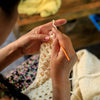
Why Handmade, Ethical Products Are Worth the Investment

Quick Listen:
In an era when a $5 fast-fashion tee disintegrates after its debut spin in the wash destined for a landfill before the next trend cycle a subtler revolution is unfolding. From the vibrant lanes of Mumbai to the polished atriums of Dubai, shoppers now linger over hand-loomed scarves, tracing the weave and wondering: What narrative is stitched into this fabric? Is the premium price a fair exchange for authenticity?
Fast fashion erodes cultural heritage, sidelining artisans and reducing traditions to trends. At IndieHaat, we champion India's craftspeople with handcrafted sarees, apparel, décor, and skincare rooted in authenticity. Each piece embodies skill and ethical care. Support artisans and preserve India's timeless legacy Shop Now!
Beyond Price Tags: Why Handmade, Ethical Products Deliver Enduring Value in a Throwaway Culture
Discerning buyers in India, the United States, Singapore, Australia, the United Kingdom, and the United Arab Emirates are redefining retail by prioritizing artisan skill, ecological integrity, and community upliftment.
The transformation is understated yet undeniable. It registers in the quiet addition of hand-forged earrings to digital baskets, in the expanding boutique aisles stocked with eco-conscious grooming essentials, and in the dignified wages reaching rural workshops. Hard data underscores the momentum: the worldwide handicrafts sector, valued at USD 739.95 billion in 2024, is forecast to climb to USD 983.12 billion by 2030, advancing at a compound annual growth rate of 4.9 percent from 2025 onward. Purchasers are not merely acquiring goods; they are investing in durability and principle.
A Strategic Pivot to Conscious Consumption
Step inside contemporary residences, and the evidence is tactile. A hand-carved wooden platter, etched with ancestral patterns, commands daily service beside its injection-molded counterpart earning admiration and outlasting fads. This resurgence is deliberate, fueled by heightened scrutiny of apparel's ecological footprint. The international ethical fashion arena is poised for a 7.9 percent CAGR through 2030, propelled by appetite for artisan-made and planet-friendly lines. Intriguingly, brick-and-mortar outlets are slated for the strongest expansion, affirming the human urge to feel craftsmanship firsthand.
Asia Pacific anchored the handicrafts landscape with a 34.81 percent revenue stake in 2024, blending heritage with forward-looking governance. India's weaving communities draw strength from the National Handicrafts Development Programme, while Singapore's Green Plan 2030 elevates green opulence. Across the Atlantic, the American handicrafts niche is projected to surge at a 3.7 percent CAGR. Deloitte's latest consumer pulse finds 58 percent of shoppers prepared to pay more for verified ethical provenance a sentiment echoed in Britain and Australia.
Policy alone does not ignite the spark. Younger cohorts, navigating inflation and planetary unease, gravitate toward deliberate, enduring labels. Ethical apparel turnover in the UK and Australia leapt 15 percent year-on-year in 2024. Singapore's National Environment Agency logs consistent favoritism for artisanal household wares over fleeting imports.
The Mechanics of a Handmade Renaissance
Beneath the luster lies robust economics. The planetary handmade jewelry domain stood at USD 151.5 billion in 2022 and is on track to attain USD 472.5 billion by 2032, expanding at an 11.9 percent CAGR from 2023. Skilled hands draw, twist, and fuse reclaimed precious metals, yielding heirlooms whose minute asymmetries defy mechanical replication and promise generational service.
Merchants respond with ingenuity. American and British marketplaces like Etsy recorded more than 40 percent annual escalation in “handmade ethical” queries throughout 2023. Singapore's collective boutiques spotlight reclaimed fabrics; Emirati labels synchronize with the nation's Year of Sustainability. Indian exporters secure 20 to 25 percent price uplifts in transatlantic corridors for authenticated fair-trade offerings. Forward-thinking stores embed QR portals to artisan portraits and provenance maps, converting openness into competitive edge.
The wellness sphere mirrors the trajectory. The sustainable personal care category, pegged at USD 54.36 billion in 2024, is anticipated to reach USD 90.40 billion by 2032 under a 6.96 percent CAGR, with Asia Pacific claiming 31.44 percent dominance. Strategic alliances exemplified by L'Oréal's September 2024 collaboration with French biotech entity Abolis to derive 95 percent bio-sourced components demonstrate that principled production can achieve industrial magnitude.
Confronting Persistent Obstacles
Friction remains acute. Cost consciousness endures; in India and the UAE, “value” frequently equates to low tariffs. Handcrafted lines necessitate pedagogical retail immersive ateliers, origin galleries to rationalize elevated tags. Accreditation frameworks diverge sharply across jurisdictions, saddling modest creators with bureaucratic overhang. Digital acumen deficits and cyclical raw-material rhythms impede expansion. Extended fabrication cycles collide with the ethos of immediate fulfillment.
Export-bound logistics demand capital outlays for end-to-end visibility. Middlemen can siphon margins, eroding equitable intent. Still, adversity breeds invention: blockchain trials in India and Britain authenticate lineage sans intermediaries, fortifying buyer confidence.
Emergent Avenues and Macro Impact
The horizon glitters with promise. India's handicraft shipments touched USD 4.6 billion in fiscal 2024 and are targeted to surpass USD 6.5 billion by decade's end, catalyzed by e-commerce gateways. The UAE and Singapore position themselves as conduits for premium South Asian artistry to expatriate and luxury cohorts. Australia's conscientious retail corridor forecasts a 10 percent CAGR through 2030, nourished by curated inflows.
Digital amplification is pivotal. Augmented-reality showrooms enable patrons to overlay a hand-knotted carpet onto their parquet before commitment. The ethical label ecosystem is charted to swell from USD 1,082.66 billion in 2025 to USD 1,962.15 billion by 2034 at a 6.83 percent CAGR, with North America anchoring volume and Asia Pacific posting the swiftest ascent. Tri-sector pacts among corporations, civil society, and oversight bodies accelerate uptake.
Circular paradigms gain traction. Brussel's 2023 textile circularity directive champions resale ecosystems like Vinted, diverting garments from incinerators. Amid persistent inflationary pinch, pre-owned commerce emerges as both frugal and forward-thinking.
Craftsmanship Ascendant: The Next Echelon of Luxury
Every conscientious transaction reverberates: incomes stabilized, legacies safeguarded, emissions curtailed. Handmade artifacts have transcended fringe status to embody aspiration. As ecological rigor fuses with refined taste, these creations forge affective bonds unattainable by assembly-line surrogates.
Retail strategists, heed the signal: champion lucid narratives, ally with credentialing authorities such as Fair Trade USA, and fuse virtual immersion with tangible expositions. From Delhi's emporia to Singapore's design precincts, mindful acquisition is no longer peripheral it is the prevailing current. As global fatigue with ephemera mounts, artisan excellence stands revealed not merely as preference, but as the vanguard of purposeful commerce.
Frequently Asked Questions
Why are handmade products more expensive than mass-produced items?
Handmade products command higher prices because they involve skilled artisan labor, authentic craftsmanship, and often use sustainable, ethically sourced materials. These items are built to last generations rather than a single season, with unique characteristics that machine-made products cannot replicate. Studies show that verified ethical products can secure 20-25% price premiums in international markets, reflecting their superior quality and the fair wages paid to craftspeople.
How does buying ethical handmade products support artisan communities?
Purchasing ethical handmade goods directly stabilizes incomes for rural artisan workshops and helps preserve cultural heritage that would otherwise be lost to fast fashion trends. Programs like India's National Handicrafts Development Programme, combined with fair-trade practices, ensure dignified wages reach craftspeople while maintaining traditional techniques passed down through generations. Each conscious transaction reverberates beyond the purchase—supporting livelihoods, safeguarding legacies, and reducing environmental impact.
Are handmade ethical products really better for the environment than fast fashion?
Yes, handmade ethical products significantly reduce environmental harm compared to fast fashion, which contributes to massive textile waste and pollution. Artisan-made items use sustainable materials, involve minimal mechanized production, and are designed for longevity rather than disposal after one trend cycle. The global sustainable personal care and ethical fashion markets are experiencing rapid growth (6.96-7.9% CAGR) as consumers recognize that durability and eco-conscious production curtail emissions and waste while circular economy models further divert goods from landfills.
Disclaimer: The above helpful resources content contains personal opinions and experiences. The information provided is for general knowledge and does not constitute professional advice.
You may also be interested in: The Role of Fair Trade Principles in Indian Craft Sourcing
Fast fashion erodes cultural heritage, sidelining artisans and reducing traditions to trends. At IndieHaat, we champion India's craftspeople with handcrafted sarees, apparel, décor, and skincare rooted in authenticity. Each piece embodies skill and ethical care. Support artisans and preserve India's timeless legacy Shop Now!
Powered by flareAI.co