



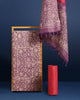
Chikankari Pure Chanderi Silk Bright Purple Kurta & Dupatta
Handcrafted at Indiehaat Chikankari Unit in Lucknow, Master Artisan: Arun.

Experience elegance with our Handcrafted Chikenkari Chanderi Silk Kurti Dupatta. Adorned with delicate chikankari embroidery on luxurious Chanderi silk fabric, each set offers a perfect blend of style and tradition, perfect for any occasion.
Work: Chikankari, Hand Dyeing
Measurements: Length: Kurti - 2.9-3.0 meter, Dupatta - 2.4-2.5 meter
Fabric: Chanderi Silk
Package Contains: Unstitched Fabric: Top + Dupatta
Wash Care: Dry clean Preferred. Wash separately. Dry in Shades.
Disclaimer:
Color hues may slightly vary from that which appears in the image due to different screens and displays
Minor irregularities is the uniqueness of handcrafted products and makes each piece exquisite
| Fabric / Material | Chanderi Silk |
| Craft / Technique | Chikankari, Hand Dyeing |
| Colour | Purple |
| Origin / Cluster | Lucknow |
Chanderi is a traditional ethnic fabric characterized by its lightweight, sheer texture and fine luxurious feel.The fabric borrowed its name from the small town Chanderi in Madhya Pradesh where traditional weavers practice the art of producing textured sarees in cotton and silk.
Exchange: *Easy exchange is available within 3 days of receiving the product.
*No exchanges on home decor items.
*Unboxing video is required.
Return: *Only for damaged/wrong products.
*Unboxing video required.
Learn More
How does the dupatta pair with the violet kurta?
The kurta is a strong violet with a self-coloured scalloped yoke. The dupatta repeats the violet in a purple-and-white tie-dye with a silver-toned edge, so the set looks coordinated, while the white in the dupatta keeps it from feeling heavy.
Is bright purple wearable at work?
Yes, especially with a quiet bottom. A white or black straight pant, small silver studs and a neatly folded dupatta make violet look confident without being loud. The self-coloured chikankari keeps the kurta refined rather than flashy.
Which occasions does it suit?
Festive occasions lead: the bright purple with chikankari feels right for gatherings with family, especially styled with gold. Add jewellery and drape the dupatta open, and it suits dinners and office parties. It is easy for kitty parties and brunches too.
Will I need a tailor for the kurta?
Yes. The kurta comes as an unstitched length of chanderi silk with the embroidery in place, while the dupatta is ready to wear. Give the kurta fabric to a tailor who is used to fine fabrics, since chanderi is light and needs careful handling at the seams and neckline.
Is chanderi silk see-through?
Chanderi is known for a light, slightly sheer texture, which is part of its charm. For the kurta, most customers add a lining or wear a slip underneath; paler shades show the sheerness more than deep ones. The dupatta is meant to stay airy and needs nothing behind it.
How can I drape the dupatta?
At about 2.4 to 2.5 metres, the dupatta suits most styles. For work, fold it narrow and let it fall from one shoulder. For an evening, open it across both shoulders so the tie-dye pattern and the border show, or pin it at one shoulder and let the length fall behind.




RECENTLY VIEWED PRODUCTS
All Products, Best Selling Products, Chanderi Silk Dress Material, Chikankari, Embroidered Crafts, Evening & Dinner Suits, Festive Suits, Kitty & Brunch Suits, New Arrivals, Newest Products, Office & Workwear Suits, Office Party Suits, Playful Festive Suits, Playful Kitty & Brunch Suits, Playful Suits, Purple Suits, Puthandu Sale, Rakshabandhan Collection, Savan, Silk Dress Material, Suits & Dress Material
