



Lehariya Pure Silk Kota Doria Saree Pink Handcrafted
Ready for your next wedding, festival or family function
Handcrafted at Indiehaat Unit in Kota, Master Artisan: Haq Nawaz

Experience simplicity with our Handcrafted Kota Silk Plain Saree. Made from fine Kota silk fabric, each saree features a minimalist design, perfect for both casual and formal wear, adding a touch of understated elegance to your attire.
Work: Hand Dyeing
Measurements: 6.3-6.4 Meter (Including Blouse)
Blouse Piece: Yes
Fabric: Kota Doria Silk
Package Contains: 1 Saree with Blouse (attached)
Wash Care: Dry Clean Only. Keep them in separate bags in a dry place. Change folds and expose to non-moist air regularly. Dry in Shades.
Disclaimer:
Color hues may slightly vary from that which appears in the image due to different screens and displays
Minor irregularities is the uniqueness of handcrafted products and makes each piece exquisite
| Fabric / Material | Kota Doria Silk |
| Craft / Technique | Hand Dyeing |
| Colour | Pink |
| Origin / Cluster | Kota |
Exchange: *Easy exchange is available within 3 days of receiving the product.
*No exchanges on home decor items.
*Unboxing video is required.
Return: *Only for damaged/wrong products.
*Unboxing video required.
Learn More
How do the pink and yellow work together?
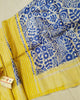
The lehariya stripes come out in a warm yellow-gold against a vivid pink ground. The two warm colours glow together instead of contrasting sharply, so the saree looks festive without any heavy work. A narrow gold edge with tiny tassels runs along the saree and picks up the yellow.
Will the stripes look busy once draped?
Not much. The stripes are fine and evenly paced, so in the pleats they fold into a soft texture rather than a loud pattern, and across the pallu they show as clean diagonals. Keep the blouse and jewellery simple and let the stripes do the work.
Is the blouse separate or attached?
The blouse comes attached to the saree, cut from the same length of fabric. The total length, blouse included, is 6.3 to 6.4 metres. Ask your tailor to measure before cutting, so the blouse portion comes off cleanly and the rest of the saree is left whole.
Will my saree match what I see online exactly?
Very close, but not identical. Lehariya is tied and dyed by hand, so the stripe spacing, the depth of pink and the tone of the yellow vary a little from piece to piece, and screens shift colour too. The design and colour family stay the same, with your saree carrying its own small differences.
Who made it?
It is handcrafted at the Indiehaat unit in Kota, Rajasthan, under master artisan Haq Nawaz. Kota is the home of Doria weaving, and the tie-dyeing on this saree is done by hand, which is where its slightly irregular stripes come from.
How do I store it?
Keep it in its own bag in a dry place, away from damp. Every so often take it out, change the folds and let it air somewhere free of moisture. Clean it by dry cleaning only, and if it ever gets damp, dry it in the shade.




More sarees in pink
View all 25% off
 25% off
 18% off
 18% off
 21% off
 18% off
 20% off
 24% off
Bright & playful sarees for festive days
View all 18% off
 21% off
 8% off
 33% off
 15% off
 12% off
 35% off
 25% off
Handcrafted by Kota artisans
View all 22% off
 28% off
 33% off
 25% off
 26% off
 18% off
 19% off
 22% off
RECENTLY VIEWED PRODUCTS
Ada-e-Ramazan, All Products, Best Selling Products, Diwali Sale, Evening & Dinner Sarees, Festive Sarees, Ganesha Chaturthi, Kitty & Brunch Sarees, Kota Sarees, Kota Silk Sarees, New Arrivals, Newest Products, Office & Workwear Sarees, Pink Sarees, Playful Festive Sarees, Playful Kitty & Brunch Sarees, Playful Sarees, Playful Summer & Travel Sarees, Puthandu Sale, Sarees, Savan, Silk Sarees, Silk Sarees Ad, Summer & Travel Sarees, Ugadi - The New Year, Ugadi Sale, Valentine Edit, Valentines Edit Pink, VaraMahalakshmi Sale
