



Syaahi Mangalagiri Silk Handpainted Creamy Beige Dupatta
Handcrafted at Indiehaat Kalamkari Unit in Mangalagiri - Master Artisan Jyothi.

Elevate your look with our Mangalagiri cotton silk dupatta! Hand-painted in a splash of vivid colors, it adds a burst of joy and elegance to any outfit.
Measurements: Length - 2.4-2.5 Meter, Width - 35-36 inch
Work: Hand Paint
Fabric: Mangalagiri Cotton Silk
Package Contains: 1 Dupatta
Wash Care: Gentle Handwash. Wash separately
Note: As these are made to order pieces, it will take 10 days to make, and the dispatch will happen post completion.
Disclaimer: Color hues may slightly vary from that which appears in the image due to different screens and displays
Minor irregularities is the uniqueness of handcrafted products and makes each piece exquisite
| Fabric / Material | Mangalagiri Cotton Silk |
| Craft / Technique | Hand Painting |
| Colour | Pink |
| Origin / Cluster | Mangalagiri |
Hand painting is the art of applying paint manually onto a surface using brushes or other tools. Each piece is uniquely crafted with intricate details and personal touches, creating a one-of-a-kind artwork. This technique is often used to embellish textiles, ceramics, and various other mediums, adding a distinctive, personalized aesthetic.
Exchange: *Easy exchange is available within 3 days of receiving the product.
*No exchanges on home decor items.
*Unboxing video is required.
Return: *Only for damaged/wrong products.
*Unboxing video required.
Learn More
What is painted on the Syaahi dupatta?
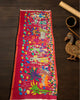
One end carries a dense hand-painted scene of deer, birds and flowers in yellow, blue, orange and green, while the rest of the length stays quieter. Green patterned borders run down both sides. Because the busiest painting sits at one end, it falls over the shoulder or arm and shows off the scene when you drape it.
How should I drape it so the painted end shows?
Let the scene end hang at the front over one shoulder, or pin it so it falls down your back like a pallu. At 2.4 to 2.5 metres long and 35 to 36 inches wide, there is enough fabric to wrap it across both shoulders as well, with the painted end still in view.
Where can I wear this dupatta?
Its first home is the office: thrown over a plain kurta, it adds colour without fuss. It also goes to festive gatherings, summer outings and travel, and kitty parties or brunches, where the painted animal scene gets noticed up close.
What is Mangalagiri cotton silk like to wear?
Mangalagiri cotton silk is handwoven and known for its rich texture, durability, soft sheen and comfortable wear. The painted surface here looks matte, so the deer, bird and flower scene comes through clearly against the rose-pink ground.
How do I wash it?
Handwash it gently and keep it apart from other clothes in the wash. Since the motifs are painted by hand, treat the painted end softly, with no hard scrubbing or wringing. Press out the excess water and dry it spread out so the scene does not crease while damp.
Why might my piece look slightly different from the pictures?
Each Syaahi dupatta is painted by hand, so small irregularities in line and shading are part of the piece rather than flaws. Screens also show colour differently, so the hue in your hands can differ slightly from what you see on your phone or laptop.



More accessories in pink
View all 31% off
 31% off
 30% off
 30% off
 30% off
 16% off
 11% off
 23% off
Earthy-toned accessories for festive days
View all 30% off
 30% off
 30% off
 30% off
 30% off
 30% off
 30% off
 30% off
Handcrafted by Mangalagiri artisans
View all 28% off
 28% off
 28% off
 28% off
 28% off
 28% off
 28% off
 28% off
RECENTLY VIEWED PRODUCTS
Accessories, All Products, Best Selling Products, Dupatta, Dupattas & Stoles, Earthy Accessories, Earthy Festive Accessories, Earthy Office & Workwear Accessories, Earthy Summer & Travel Accessories, Festive Accessories, Ganesha Chaturthi, Hand Painted, Hand Painted Dupattas, Kitty & Brunch Accessories, Mangalagiri Accessories, Mangalagiri Handpainted Dupatta, New Arrivals, Newest Products, Office & Workwear Accessories, Pink Accessories, Printed & Painted Crafts, Puthandu Sale, Savan, Summer & Travel Accessories, Ugadi Sale, Valentine Edit
