



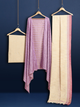
Pure Linen Tranquil Purple Dupatta & Blue Ikkat Kurti Set
Handcrafted at Indiehaat Bhagalpur Unit. Master Weaver: Wasif.

Experience traditional charm with our Handcrafted Pure Linen Ikkat Kurti Dupatta Set. Featuring traditional Ikkat patterns on premium linen fabric, each set offers comfort and style, perfect for adding a touch of ethnic flair to your ensemble.
Work: Hand Dyeing, Ikkat
Measurements: Top: 2.4-2.5 Meter Length, Width: 44 Inches
Dupatta: 2.3-2.4 Meter Dupatta, Width: 32-33 Inches
Fabric: Pure Linen, Cotton
Package Contains: Unstitched Fabric: Top + Dupatta
Wash Care: Gentle Handwash with Mild detergents. Wash separately. Dry in Shades.
Disclaimer:
Color hues may slightly vary from that which appears in the image due to different screens and displays
Minor irregularities is the uniqueness of handcrafted products and makes each piece exquisite
| Fabric / Material | Linen |
| Craft / Technique | Hand Dyeing, Ikkat |
| Colour | Purple, Blue |
| Origin / Cluster | Bhagalpur |
Ikat (literally means tie in various Indonesian languages it means "to bind") is a dyeing technique used to pattern textiles that employs resist dyeing on the yarns prior to dyeing and weaving the fabric. The bindings may then be altered to create a new pattern and the yarns dyed again with another colour.
Exchange: *Easy exchange is available within 3 days of receiving the product.
*No exchanges on home decor items.
*Unboxing video is required.
Return: *Only for damaged/wrong products.
*Unboxing video required.
Learn More
How do the two colours look together?
The dupatta is a soft, rosy pink with silver-toned round dots, a silver band and tassels, and the kurta fabric is a teal blue with rows of small white zigzag arrow motifs in ikkat. Warm against cool, the two make a fresh, lively contrast, and the silver on the dupatta keeps the pairing light rather than heavy.
What bottom suits the combination?
A white or ivory bottom picks up the white ikkat and keeps the set light for office days. A teal churidar makes the kurta look longer and lets the dupatta stand out. Silver jewellery echoes the silver buttis on the dupatta.
What is in the set?
Two pieces: unstitched kurta fabric in cotton ikkat, about 2.4 to 2.5 metres long and 44 inches wide, and a pure linen dupatta of about 2.3 to 2.4 metres by 32 to 33 inches. A bottom is not included, so you can pair it with something you already own.
How is ikkat made?
Ikkat is a resist-dyeing technique: the yarns are tied in sections and dyed before weaving, and the bindings can be changed to dye again in another colour. The pattern appears as the dyed yarns are woven, which is how the rows of white zigzag arrows on this kurta fabric are formed.
How do I wash the set?
Hand wash gently with a mild detergent, wash the pieces separately and dry them in the shade. Do not wring the linen dupatta; press the water out instead and iron it while slightly damp. Linen softens a little more with each wash.
What is the linen dupatta like?
It is pure linen, about 2.3 to 2.4 metres long and 32 to 33 inches wide, with tasselled ends. Linen starts slightly crisp and softens with each wash, and it is breathable in hot weather. The width suits a single-shoulder drape or a loose wrap across both shoulders.



RECENTLY VIEWED PRODUCTS
All Products, Best Selling Products, Bhagalpur Suits, Blue Suits, Cotton & Linen Suits, Everyday Suits, Festive Suits, Ganesha Chaturthi, Handwoven Crafts, Ikat, Independence Day Sale, Kitty & Brunch Suits, Linen Dress Material, Linen Dupatta Ikkat Top, New Arrivals, Newest Products, Office & Workwear Suits, Playful Festive Suits, Playful Kitty & Brunch Suits, Playful Suits, Playful Summer & Travel Suits, Pure Linen Dupatta With Ikkat Kurti, Purple Suits, Puthandu Sale, Rakshabandhan Collection, Rang Rasiya, Republic Day Collection, Savan, Suits & Dress Material, Summer & Travel Suits, Summer Vibe
