



Sunny Ikkat Slub Linen Handloom Blue Saree
Handcrafted at Indiehaat Bhagalpur Unit. Master Weaver: Danish.

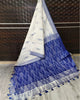
Elevate your style with our Handcrafted Slub Linen Ikkat Saree. Featuring traditional Ikkat patterns on soft slub linen fabric, each saree exudes elegance and charm, perfect for adding a touch of ethnic flair to your ensemble.
Work: Ikkat, Hand Dyeing
Measurements: Length - 6.3-6.4 meter
*Blouse: Pallu Color
Blouse Piece: Yes
Fabric: Slub Linen
Package Contains: 1 Saree with Blouse (attached)
Wash Care: Gentle Handwash with Mild detergents. Wash separately. Dry in Shades.
Disclaimer:
Color hues may slightly vary from that which appears in the image due to different screens and displays
Minor irregularities is the uniqueness of handcrafted products and makes each piece exquisite
| Fabric / Material | Slub Linen |
| Craft / Technique | Ikkat, Hand Dyeing |
| Colour | Blue |
| Origin / Cluster | Bhagalpur |
Slub linen fabric features irregularities or "slubs" in its texture, adding a rustic charm to the fabric. It retains the breathability and durability of linen while offering a unique visual texture, making it a popular choice for sarees with a natural and relaxed aesthetic.
Exchange: *Easy exchange is available within 3 days of receiving the product.
*No exchanges on home decor items.
*Unboxing video is required.
Return: *Only for damaged/wrong products.
*Unboxing video required.
Learn More
How strong is the contrast between body and pallu?
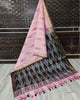
Quite strong. The body is a pale aqua with only sparse grey motifs, so it looks almost plain from a distance, and then the pallu turns to a vivid red Ikkat. Cool against warm, the red sits at the shoulder and draws the eye upward. It is a simple way to wear colour without a busy pattern.
What finishes the pallu end?
Silver-toned stripes run across the end of the pallu, followed by tassels. A thin red edge runs along the body, linking it to the pallu. The stripes add a little shine without any heavy work, so the saree stays light and easy to carry, whether pleated neatly or left loose.
How do I separate the blouse piece?
The blouse piece is attached to the saree, in the pallu colour, so it needs to be cut off before stitching; your tailor can do this cleanly along the weave. A blouse in the red pallu shade brightens the aqua body. For a softer look, pair it with a grey or aqua blouse and keep the red at the shoulder.
How do I keep the red and aqua fresh?
Care matters with a light body and a vivid red pallu side by side. Wash the saree separately, gently by hand, in cool water with a mild detergent, and do not leave it soaking. Rinse well and dry it in the shade, spread out so the red and aqua sections do not sit bunched together while wet.
Why does the fabric have small raised lines?
Those are slubs, the thick and thin patches in linen yarn that show up as small textured lines across the cloth. They are typical of slub linen and give it a natural, rustic surface. Along with slight shifts in the Ikkat motifs, they are part of handcrafted fabric and vary from piece to piece.
Is it comfortable in the heat?
Yes. Linen breathes well and lets air pass through, so it stays comfortable on hot, humid days. The saree looks light, and the pale aqua body keeps it visually cool as well, making it an easy pick for summer travel and long office days.



More sarees in blue
View all 18% off
 14% off
 33% off
 33% off
 19% off
 19% off
 16% off
 24% off
Soft & calm sarees for summer & travel
View all 18% off
 27% off
 22% off
 40% off
 18% off
 32% off
 18% off
 22% off
Handcrafted by Bhagalpur artisans
View all 33% off
 18% off
 19% off
 24% off
 12% off
 12% off
 25% off
 15% off
RECENTLY VIEWED PRODUCTS
Ada-e-Ramazan, All Products, Best Selling Products, Bhagalpur Sarees, Blue Sarees, Diwali Sale, Everyday Sarees, Handwoven Crafts, Ikat, Ikkat Sarees, Independence Day Sale, Less than 3K, Linen And Cotton Sarees, Linen Sarees, New Arrivals, Newest Products, Office & Workwear Sarees, Puthandu Sale, Rakshabandhan Collection, Rang Rasiya, Reception, Republic Day Collection, Same Day Bangalore Delivery, Sarees, Savan, Serene Office & Workwear Sarees, Serene Sarees, Serene Summer & Travel Sarees, Slub Linen Ikkat Work Handloom Saree, Slub Linen Sarees, Summer & Travel Sarees, The Women’s Day Edit, Ugadi - The New Year
