
Steps to Wear a Saree Correctly
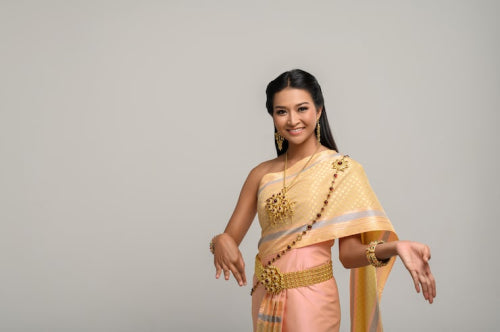
Picture yourself in front of a full-length mirror, the gentle waves of a handwoven Tussar saree flowing gracefully, its natural hues evoking the skilled hands of Indian artisans who craft each piece with unwavering dedication. For countless individuals in dynamic urban centers from New York to Dubai, the saree transcends mere clothing it's a vital link to cultural heritage, a bold assertion of sophistication amid the rush of contemporary trends. However, mastering the drape can seem like decoding an ancient art, especially for newcomers.
This in-depth look uncovers the nuances of saree draping in our spotlight feature, Steps to Wear a Saree Correctly: A Timeless Tradition with Modern Relevance, merging time-honored methods with current worldwide appeal. From Bangalore's lively avenues to expatriate groups in the United States and Australia, IndieHaat leads this resurgence, meticulously curating genuine items that pay homage to India's artistic legacy while fitting seamlessly into today's lifestyles.
Fast fashion erodes cultural heritage, sidelining artisans and reducing traditions to trends. At IndieHaat, we champion India's craftspeople with handcrafted sarees, apparel, décor, and skincare rooted in authenticity. Each piece embodies skill and ethical care. Support artisans and preserve India's timeless legacy Shop Now!
Saree as a Cultural Statement
The saree endures as an emblem of India's multifaceted cultural heritage, progressing from age-old customs to an essential element in international closets. Originating as basic wraps in countryside settings, it has morphed into a worldwide style symbol, adopted by women navigating Singapore's bustling bazaars or London's upscale boulevards. For IndieHaat, a e-commerce enterprise rooted in Bangalore, this attire represents far more than aesthetics it's a pledge to uphold artisanal crafts.
Established with an emphasis on direct collaborations with craftspeople, IndieHaat carefully vets every product, guaranteeing moral manufacturing and true-to-form cultural essence. Its assortment highlights artisanal clothing such as Linen and Tussar sarees, complemented by dress materials that honor unadulterated textiles like cotton, silk, and linen. This strategy not only bolsters artistic groups but also delivers these gems to viewers in key areas including India, the US, UK, UAE, Singapore, and Australia, where enthusiasm for ethnic attire escalates alongside the drive for eco-friendly fashion.
The global ethnic wear market size stood at an estimated USD 92,309.9 million in 2023, with projections to climb to USD 138,626.2 million by 2030, advancing at a compound annual growth rate of 6% between 2024 and 2030. In that year, the offline category contributed USD 58,477.6 million in revenue, whereas the online category stands out as the most promising distribution avenue, experiencing the swiftest expansion over the coming years. Asia Pacific emerged as the leading revenue hub, reflecting its strong industrial and consumer base. Latin America, led by Brazil, is poised for the fastest acceleration through the decade, while North America continues to maintain a steady yet smaller share of the global market. Looking ahead, India is projected to rise as the foremost revenue contributor worldwide by 2030, underscoring its growing economic influence and expanding domestic demand.
Emerging Trends in Saree Draping
The contemporary saree landscape brims with creativity and renewal. Artisanal cottons and linens are staging a strong return, attracting environmentally aware consumers seeking airy, durable choices. Tussar silk, prized for its distinctive weave, imparts a countryside elegance ideal for celebrations or relaxed excursions alike.
Across platforms such as Instagram, Facebook, and YouTube, content creators are revolutionizing draping techniques. Envision brief demonstrations that blend classic folds with fresh interpretations matching a linen saree to a shortened top for an edgy urban vibe or overlaying it on denim for city sophistication. Among overseas communities in the UK and UAE, ladies are exploring mixed aesthetics, incorporating local variations like Bengali or Gujarati folds to match work environments or heritage gatherings.
Such worldwide adoption echoes wider industry movements, with North America securing 4.9% of international income in 2023 and nations like Brazil geared for swift advancement. India is forecasted to retain its forefront status by 2030, yet the phenomenon spans extensively, propelled by outlets like Amazon Marketplace and ONDC, where IndieHaat displays its handpicked offerings.
Instagram personalities, including profiles like @anilarubyraj and @drminimalhotra, frequently spotlight these developments, fusing genuineness with approachability to motivate international audiences to integrate sarees into routine attire.
Step-by-Step Guide: How to Wear a Saree Correctly
Approaching saree draping may appear intimidating initially, yet it becomes rewarding with persistence. For novices, commence with fundamentals. Select fabrics that are forgiving, such as cotton-silk, georgette, crepe, or linen, which hang smoothly and tolerate small errors. A narrow edging minimizes volume, simplifying the procedure.
Preparation is key: Don a properly tailored blouse and a coordinated petticoat fastened firmly at the midsection. Wear your shoes beforehand whether stilettos or platforms to precisely determine the saree's drop, preventing trails or uplifts.
Initiate by securing one extremity of the saree (excluding the pallu) into the petticoat rightward of the belly button, then encircle it right to left, fastening tightly. Form 5 to 7 folds, roughly 4-5 inches across, align them orderly, and insert at the midpoint, marginally left of the center. Anchor with a pin for firmness.
Proceed to wrap the leftover material around from left to right, lifting it across the left arm to shield the chest at an angle. Fashion the pallu by allowing it to dangle freely for informal settings or folding and fastening for refinement. Fine-tune accordingly, placing pins at the arm, folds, and side target 4-5 robust ones to avert shifts without excess.
For denser silk variants, akin to IndieHaat's genuine silk array, sidestep frequent errors. Avoid an unsuitable petticoat; a flimsy cotton lacks support for the heft. Instead, choose a form-fitting saree underskirt for a streamlined outline, or a rigid satin or cotton-silk alternative that hugs the waist securely, offering framework and avoiding sags.
Refrain from skimping on fasteners; inadequate pinning risks pallu drops or fold spreads. Employ 4–5 strong safety pins strategically one at the shoulder for the pallu, several for the pleats, and one at the hip to maintain position discreetly.
Disregard blouse suitability at your peril; a mismatched one disrupts poise and grace. Guarantee the blouse hugs the shoulders and chest aptly, providing robust backing and refining the contour, particularly with weighty fabrics.
Botch the folding, and the result turns sloppy; irregular or puffed pleats detract from polish. For silks, craft broader folds than with lighter cloths aim for 6–8 uniform ones, press if required, and secure prior to tucking at the navel for balanced flow.
Overlook footwear sequence, and the hem falters; post-drape shoe swaps cause drags or shortness. Always footwear first to ensure the length grazes the ground ideally, eliminating hasty fixes.
These insights stem from expert advice on draping heavy silk sarees, emphasizing types like Kanjivaram, Banarasi, or Patola, where precision elevates the majestic appeal.
Further guidance for absolute beginners highlights the classic Nivi style: Tuck and encircle, pleat neatly like a cascade, drape the pallu diagonally. Practice durations may start at 30–40 minutes, but repetition hastens proficiency. Mirror rehearsals aid in grasping fabric dynamics, and tutorials or assistance accelerate learning.
A parallel tutorial from March 18, 2023, reinforces: Select airy cottons or chiffons initially, don fitted blouse and taut petticoat, tuck centrally right of navel, form 5-7 four-to-five-inch pleats below, drape over left shoulder and pin, pleat pallu and secure back, adjust with pins. Embellish with jewels, and persist through trials.
Rehearse before a reflector, possibly via YouTube clips, and recall: Poise transforms any arrangement into artistry. Adorn with studs, a forehead mark, and wristlets to heighten the presentation.
Real-World Applications: Sarees Beyond Tradition
Sarees extend past rituals nowadays. In business hubs spanning India and Singapore, linen versions function as ventilated career wear, teamed with jackets for refined presence. For overseas residents in the US or Australia, they dazzle at Diwali soirees or nuptials, melding sentiment with modern tailoring.
City youth reinvent them for routine: Visualize Tussar sarees atop wide-leg trousers for midday meals or as chic coverings in UAE dusks. Through venues like Amazon and ONDC, IndieHaat's crafted works render these uses attainable, linking workshop origins to international thresholds.
In laid-back scenarios, the saree's adaptability excels, suiting occasions like Eid or blended heritages in the UK, where bespoke patterns from artisan origins infuse individuality.
Challenges and Limitations
Amid the charm, obstacles linger. Elevated costs frequently dissuade purchasers, mirroring the intensive labor in woven sarees. Additionally, credibility concerns arise assuring online linen purity proves tricky.
The primary obstacle? Absence of physical interaction pre-purchase. Lacking sensory verification, reluctance grows, notably for novice overseas shoppers.
IndieHaat counters via narrative visuals: In-depth clips on Instagram and YouTube, partnerships with influencers like @svishala74 or @varshaoak, and clear origin tales fostering assurance.
Opportunities and Business Impact
Nevertheless, these hurdles unveil prospects. Escalating calls for moral, green clothing sync with IndieHaat's strengths craftsman-sourced handmade goods, distinctive motifs, and restricted pure materials like linen, silk, cotton.
Social channels magnify this, with lessons and narratives on Facebook and Instagram boosting interaction. Broadening to expatriate zones like UAE and US through Amazon and ONDC might amplify effects, converting doubts to sales via reliability pledges and drape manuals.
With online paths expanding quickest in ethnic garb, entities like IndieHaat stand ready to uplift additional craftspeople while enchanting wider crowds.
Future of Saree Styling
The saree persists, evolving across epochs. Forward, eco-materials will prevail, fused drapes will pioneer, and AI tools may furnish digital fittings to span the sensory divide.
Crafted works, such as IndieHaat's, will endure as heritage signals and style declarations. For enterprises, success hinges on uniting veracity with direction lessons clarifying drapes, accounts personifying makers, and choices echoing universally.
Ultimately, be it in Bangalore or Brooklyn, donning a saree surpasses mere adornment; it's interlacing into a vibrant legacy. Venture in the creases could reveal an evolved self.
Frequently Asked Questions
What are the basic steps to wear a saree correctly for beginners?
Start by wearing a well-fitted blouse and petticoat, then tuck one end of the saree into the petticoat to the right of your navel. Wrap the saree around your waist from right to left, create 5-7 pleats (4-5 inches wide), and tuck them at your waist slightly left of center. Finally, drape the remaining fabric (pallu) over your left shoulder and secure with safety pins at key points.
What type of saree fabric is best for first-time wearers?
Beginners should choose forgiving fabrics like cotton-silk, georgette, crepe, or linen sarees that drape smoothly and are more tolerant of small mistakes. Avoid heavy silk sarees initially, as they require more skill to handle properly. Fabrics with narrower borders also help reduce bulk and make the draping process easier for newcomers.
What are the most common mistakes to avoid when draping a saree?
The five main mistakes include using an inappropriate petticoat (choose form-fitting saree underskirts over flimsy cotton), inadequate pinning (use 4-5 strong safety pins strategically), wearing an ill-fitting blouse, creating irregular or uneven pleats, and putting on shoes after draping the saree. Always wear your footwear first to ensure the proper length and avoid last-minute adjustments.
Disclaimer: The above helpful resources content contains personal opinions and experiences. The information provided is for general knowledge and does not constitute professional advice.
You may also be interested in: The Importance of Saree Fall: Enhancing Elegance and Style in
Fast fashion erodes cultural heritage, sidelining artisans and reducing traditions to trends. At IndieHaat, we champion India's craftspeople with handcrafted sarees, apparel, décor, and skincare rooted in authenticity. Each piece embodies skill and ethical care. Support artisans and preserve India's timeless legacy Shop Now!
Powered by flareAI.co