Modern Ways to Wear a Saree: Fusion Styles for 2025
Quick Listen:
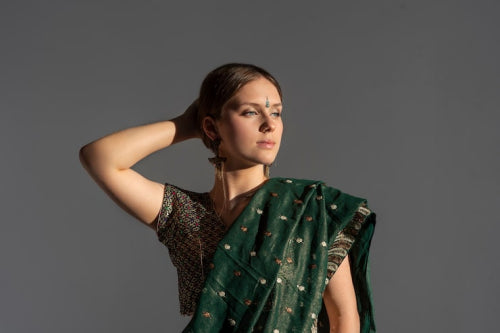
The saree, a flowing expanse of fabric stretching six to nine yards, has long been India's sartorial heartbeat, weaving centuries of tradition into every fold. In 2025, it's shedding its conventional silhouette, emerging as a global fashion force that marries heritage with audacious innovation. From Mumbai's bustling ateliers to the glitzy stages of international galas, the saree is no longer just a garment it's a movement. Imagine a vibrant chiffon saree, its edges sparkling with gemstone tassels, draped not in the time-honored way but with pleats sculpted into modern tiers, the pallu sweeping dramatically to the floor. This is the saree's bold new chapter, and it's rewriting fashion's rulebook.
Fusion Fashion Redefines the Saree
The saree's allure lies in its ability to evolve while staying rooted in cultural reverence. Today, it's at the forefront of a booming ethnic wear market, which stood at $82.11 billion in 2023 and is expected to climb to $156.11 billion by 2032, growing at a steady 7.4% CAGR. This surge reflects a global embrace of cultural celebrations think weddings, festivals, and diasporic events where traditional attire meets modern tastes. Designers are reimagining the saree with Western influences, pairing it with tailored blazers, sleek shirts, or even chunky boots, creating looks that resonate from New York to New Delhi. The result is a garment that's as versatile as it is iconic, blending heritage with a contemporary edge.
Celebrities are amplifying this shift, turning the saree into a global style statement. At the 2025 Telugu Association of North America event in Detroit, Samantha Ruth Prabhu captivated audiences in a Kresha Bajaj creation a burnt red chiffon saree adorned with gemstone tassels. Instead of traditional draping, she styled the pleats into chic, tiered layers on one side, letting the pallu cascade elegantly. This fusion of craftsmanship and innovation underscores the saree's newfound versatility, making it a favorite not just in India but on international red carpets and fashion weeks.
Trends Shaping the Saree's Future
In 2025, the saree is a playground for creativity, with fusion styles leading the charge. Designers are blending traditional weaves with modern cuts, creating hybrids like pant-style sarees and saree skirts that pair effortlessly with crop tops or denim jackets. According to a market report, the global ethnic wear market, valued at $108.07 billion in 2024, is projected to reach $198.18 billion by 2033, driven by a 6.97% CAGR. Notably, 50% of Gen Z gravitates toward these fusion looks, while 40% of consumers are seeking artisan-crafted designs that honor tradition while embracing modernity. E-commerce, accounting for 35% of ethnic wear sales, and innovations like AI-driven tailoring (preferred by 45%) and AR try-on tools (used by 20%) are making these styles more accessible than ever.
Draping techniques are also getting a makeover. The butterfly drape, with its soft, flowing pleats, adds a romantic flair, while dhoti-style sarees bring a bold, urban energy. Accessories are key think chunky jewelry, wide belts, or even sneakers, which add a personalized edge. These innovations cater to a generation that values comfort without sacrificing style, allowing the saree to transition seamlessly from casual brunches to evening soirées. With 60% of consumers favoring eco-friendly fabrics, brands are leaning into sustainable materials, ensuring the saree remains a symbol of conscious fashion.
Navigating the Tension Between Tradition and Modernity
Reinventing the saree isn't without its challenges. As a cultural touchstone, it carries deep significance, and bold experiments like sarees styled as jumpsuits can spark debate over cultural dilution. Designers must tread carefully, balancing innovation with respect for tradition. Sustainability is another hurdle. The handloom market, valued at $8.32 billion in 2024 and projected to reach $16.62 billion by 2032 with a 9.24% CAGR, thrives on demand for unique, eco-conscious products. Yet, some fusion sarees rely on mass-produced fabrics, which can undermine the handmade ethos championed by brands like IndieHaat.
Practicality poses another challenge. Traditional sarees, with their intricate draping, are stunning but often cumbersome for modern lifestyles. Fusion styles aim to bridge this gap, but they're not always universally appropriate a saree skirt might not suit a temple ceremony, just as a heavily embellished traditional drape might feel out of place at a casual event. Still, these challenges are fueling innovation, with designers exploring sustainable fabrics and versatile designs that honor the saree's roots while fitting seamlessly into 2025's fast-paced world.
Opportunities for a Global Saree Revolution
The saree's reinvention is unlocking vast market potential. With the ethnic wear market set to hit $198.18 billion by 2033, as per the Global Growth Insights report, demand is surging not just in India but globally. Immigrant communities in the U.S. are driving sales, with mainstream retailers stocking fusion sarees to cater to diverse tastes. Online platforms, which account for 70% of ethnic wear availability, are making these designs accessible worldwide, from Manyavar-Mohey's lavish collections to BIBA's understated elegance.
For brands like IndieHaat, this is a moment to shine. By focusing on handmade, sustainable fusion sarees, they can capitalize on the 50% rise in demand for eco-friendly fabrics. Customization is another frontier imagine a handwoven Kanjivaram saree paired with a leather belt or a Chanderi drape styled with a minimalist jacket, tailored to individual tastes. This blend of tradition and personalization is drawing younger audiences and global fashion enthusiasts, positioning the saree as a universal symbol of style and identity.
A Timeless Garment, Reimagined
The saree's journey in 2025 is a testament to its enduring power a garment that carries the weight of history yet leaps boldly into the future. From Samantha Ruth Prabhu's boundary-pushing drape to the artisanal creations of small-scale weavers, the saree is proving it can be anything: a cultural heirloom, a global fashion icon, a canvas for self-expression. As the ethnic wear market surges toward $198 billion and handloom products gain momentum, brands like IndieHaat are redefining what it means to wear a saree. So, drape it with a blazer, pair it with boots, or let it flow traditionally the choice is yours. Explore IndieHaat's sustainable, handmade fusion sarees and step into a world where heritage meets innovation.
Frequently Asked Questions
What are the most popular fusion saree styles trending in 2025?
The most popular fusion saree styles in 2025 include pant-style sarees, saree skirts paired with crop tops or denim jackets, and innovative draping techniques like the butterfly drape and dhoti-style sarees. Designers are also creating modern looks by pairing traditional sarees with Western elements like tailored blazers, chunky boots, and wide belts. These fusion styles cater to Gen Z preferences, with 50% gravitating toward these contemporary interpretations of the classic garment.
How can I style a saree for modern occasions while respecting tradition?
You can modernize your saree styling by experimenting with draping techniques like tiered pleats or letting the pallu cascade dramatically, as seen in celebrity looks. Pair your saree with contemporary accessories such as chunky jewelry, sleek shirts, or even sneakers for casual events. The key is choosing appropriate styling for the occasion fusion looks work well for parties and casual gatherings, while traditional draping remains ideal for religious ceremonies and formal cultural events.
Are fusion sarees made from sustainable and eco-friendly materials?
Many fusion saree brands are embracing sustainability, with 60% of consumers now favoring eco-friendly fabrics. The handloom market, valued at $8.32 billion in 2024, is driving demand for sustainable, artisan-crafted sarees that honor traditional weaving techniques. Brands like IndieHaat focus on handmade, sustainable fusion sarees using eco-conscious materials, though some mass-produced fusion styles may not always meet these sustainability standards, so it's important to research the brand's practices.
Disclaimer: The above helpful resources content contains personal opinions and experiences. The information provided is for general knowledge and does not constitute professional advice.
You may also be interested in: Indiehaat | Traditional Artisanal Technologies in Handmade
Fast fashion erodes cultural heritage, sidelining artisans and reducing traditions to trends. At IndieHaat, we champion India's craftspeople with handcrafted sarees, apparel, décor, and skincare rooted in authenticity. Each piece embodies skill and ethical care. Support artisans and preserve India's timeless legacy Shop Now!
Powered by flareAI.co