Maheshwari Sarees: A 5,000-Year Heritage Along the Narmada River
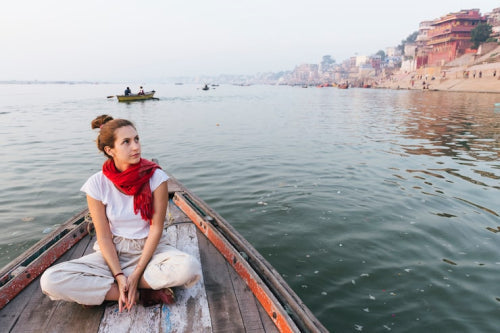
Along the serene banks of the Narmada River in Madhya Pradesh, the ancient town of Maheshwar resonates with the steady rhythm of wooden looms. Artisans here craft Maheshwari sarees, a timeless tradition rooted in over 5,000 years of Indian weaving history. These garments merge age-old methods with contemporary appeal, telling tales of royal patronage, skilled craftsmanship, and enduring cultural identity. Amid the rush of modern fast fashion, Maheshwari sarees represent a commitment to deliberate, meaningful production each intricate weave echoing the rich narrative of India's textile legacy.
Fast fashion erodes cultural heritage, sidelining artisans and reducing traditions to trends. At IndieHaat, we champion India's craftspeople with handcrafted sarees, apparel, décor, and skincare rooted in authenticity. Each piece embodies skill and ethical care. Support artisans and preserve India's timeless legacy Shop Now!
A River, a Town, a Legacy
Maheshwar stands out as a jewel along the sacred Narmada, its historic forts and river steps reverberating with the influence of Queen Ahilyabai Holkar, the visionary 18th-century leader who elevated local weaving to new heights. Her support transformed Maheshwari sarees into symbols of grace, featuring lightweight silk-cotton fabrics and precise geometric designs that define sophistication. This craft, however, predates her era, drawing from India's profound textile roots where handlooms served as essential lifelines for riverside communities.
In the present day, these sarees transcend mere apparel; they link eras, capturing the spirit of India's artisanal apparel industry. Recent data reveals that the India saree market achieved a valuation of USD 5.76 billion in 2024, with projections indicating growth to USD 10.33 billion by 2033 at a compound annual growth rate of 6.70% from 2025 onward. This expansion underscores the sector's vitality, fueled by a surge in appreciation for handcrafted items that honor tradition while adapting to current lifestyles.
What captivates admirers most about Maheshwari sarees is their harmonious design: ethereal materials that flow effortlessly, embellished with patterns drawn from local architecture and nature such as blooming lotuses, angular chevrons, and subtle lines. Crafting one saree demands several days of dedicated effort, a testament to the artisan's devotion. As worldwide preferences lean toward eco-conscious choices, these sarees are experiencing a revival, appealing to individuals who prioritize depth and significance in their wardrobe selections.
Tradition Meets Modern Demand
The handloom industry has evolved from a historical artifact into a dynamic force addressing international calls for genuine products. Valued at USD 8.32 billion in 2024, the global handloom products market is anticipated to expand from USD 8.95 billion in 2025 to USD 16.62 billion by 2032, achieving a 9.24% compound annual growth rate during that span. This momentum stems from heightened interest in environmentally sound, distinctive, and heritage-laden goods, with Asia Pacific commanding 55.77% of the market share in 2024.
Maheshwari sarees align seamlessly with this storyline. Their production emphasizes natural materials and low-impact techniques, drawing in eco-aware shoppers. Support from authorities, including Geographical Indication labels and the Handloom Mark certification, bolsters product genuineness and aids the economic well-being of weavers. Moreover, national programs like the National Handloom Development Programme and the Raw Material Supply Scheme provide crucial assistance, such as subsidies on yarn and funding for advanced weaving hubs, benefiting millions of artisans across the country.
Beyond preserving customs, demand is propelled by innovation. Weavers in Maheshwar are refreshing their palettes, introducing bold hues like deep corals and vivid indigos to entice a youthful audience. City dwellers appreciate the saree's adaptability, styling it with sleek tops or casual footwear to fuse legacy with contemporary flair. Creative minds in fashion are pushing boundaries, incorporating Maheshwari elements into accessories like scarves, shawls, and interior items such as pillow casings. Seasonal events, from Diwali celebrations to matrimonial occasions, heighten this popularity, as consumers hunt for bespoke, artisanal presents.
The explosion of online retail, enhanced by artificial intelligence for personalized options and digital fitting rooms, has democratized access to these treasures. As highlighted in industry analyses, this digital shift broadens reach, linking rural creators with urban and overseas customers. With India's online commerce sector poised to surge to USD 345 billion by 2030 and further to USD 550 billion by 2035, platforms facilitate seamless transactions, complete with convenient policies that encourage exploration among tech-savvy groups like young adults and expatriates.
Weaving Stories: Real-World Impact
Weaving forms the core of existence in Maheshwar. Initiatives led by women, backed by community organizations, uplift craftspeople through education and sales channels. For example, collectives near the riverfront enable participants, akin to members of the Rehwa Society, to produce sarees that harmonize classic styles with fresh ideas. These efforts not only safeguard expertise but also foster financial independence, allowing households to prosper amid evolving economies.
Prominent fashion innovators are elevating Maheshwari sarees onto international stages, with labels integrating their fine textures into luxury lines. Digital marketplaces play a pivotal role too, presenting these sarees with narratives about their origins, forging direct bonds between buyers and makers. Consider a longstanding family operation in Maheshwar that employs heirloom equipment, maintaining designs from the Holkar period these accounts strike a chord with consumers prioritizing originality over factory replicas.
Industry insights emphasize how endorsements from public figures and environmentally focused marketing are captivating newer generations. Recent developments, such as the February 2025 debut of designer Ridhi Mehra's 'Ever After' saree line which merges heritage with trendy elements and the January 2025 initiative by Taneira promoting certified handwoven pieces featuring notable personalities, illustrate this ongoing vibrancy. Such moves align with the premium segment's rise, where authenticity and craftsmanship command attention.
Challenges on the Loom
Despite the promise, obstacles persist. The pool of experienced weavers is shrinking, as youth migrate toward city employment offering quicker rewards. Automated duplicates saturate outlets, eroding prices for genuine articles and misleading purchasers. Escalating expenses for essentials like silk and cotton, exacerbated by logistical issues, strain operations, occasionally leading to quality concessions.
Maintaining equilibrium between progress and purity poses another dilemma. Although novel shades and forms draw crowds, traditionalists caution against excessive deviation from time-honored motifs, fearing erosion of the saree's essence. These issues mirror broader concerns in India's handloom landscape, yet Maheshwar's creators demonstrate remarkable tenacity. State aid, including equipment grants and material discounts, offers relief, though expanded measures are essential for long-term viability.
Opportunities in Every Thread
Looking ahead, prospects abound. Maheshwari sarees are set to capitalize on worldwide enthusiasm for green fabrics. Their protected status positions them as upscale investments envisioned as treasures handed across lineages. Overseas arenas, particularly in North America and Europe, are expanding, lured by the saree's narrative alongside its aesthetics. Sectors like business presents and nuptial favors present fresh avenues, transforming a saree into a declaration of principles.
Narrative-driven promotion is vital. Entities that emphasize the Narmada's influence, the artisan's proficiency, and the saree's backstory can enchant audiences. Regional dominance in handlooms signals strong local interest, with Maheshwari variants ideally suited to spearhead due to their fusion of antiquity and novelty. Collaborations with global designers and digital amplification further enhance potential, as seen in cross-cultural projects that blend Eastern weaves with Western silhouettes.
Weaving the Future
In Maheshwar, looms serve as narrators, interlacing historical threads with tomorrow's visions. Specialists advocate comprehensive strategies to nurture this art: publicly funded training to cultivate emerging talent, online forums to elevate creator profiles, and regulations to shield from counterfeits. Analyses spotlight e-commerce's pivotal function in this progression, simplifying connections from local workshops to distant patrons.
Yet, transcending fiscal aspects, Maheshwari sarees embody profound insights. Every piece, with its lustrous edges and nature-evoked designs, encapsulates India's spirit a cue that meticulously created elegance defies eras. As the Narmada endures its course, so does this practice, interlacing not merely cloth but the aspirations of craftspeople into today's cultural weave.
Frequently Asked Questions
What makes Maheshwari sarees unique and why are they so popular?
Maheshwari sarees are distinguished by their lightweight silk-cotton blend, intricate geometric patterns inspired by local architecture and nature, and their 5,000-year heritage from Maheshwar along the Narmada River. Their popularity stems from Queen Ahilyabai Holkar's 18th-century patronage, their eco-friendly handloom production methods, and their perfect balance of traditional craftsmanship with contemporary appeal. Each saree takes several days to weave by hand, making them prized for their authenticity and cultural significance.
How much is the Indian saree market worth and what's driving its growth?
The Indian saree market was valued at USD 5.76 billion in 2024 and is projected to reach USD 10.33 billion by 2033, growing at a 6.70% compound annual growth rate. This growth is driven by increasing appreciation for handcrafted items, eco-conscious consumer choices, and the global handloom products market expansion from USD 8.95 billion in 2025 to USD 16.62 billion by 2032. Digital platforms and AI-powered personalization are also making traditional sarees more accessible to younger, tech-savvy consumers.
What challenges do Maheshwari saree weavers face and what support is available?
Maheshwari saree weavers face challenges including a shrinking pool of skilled artisans as youth migrate to cities, competition from machine-made imitations, and rising costs of raw materials like silk and cotton. However, government support through programs like the National Handloom Development Programme, Geographical Indication labels, yarn subsidies, and equipment grants helps sustain the craft. Women-led initiatives and community organizations also provide crucial training and market access to preserve this traditional art form.
Disclaimer: The above helpful resources content contains personal opinions and experiences. The information provided is for general knowledge and does not constitute professional advice.
You may also be interested in: Reviving the Legacy: The Story of Handloom Weaving in India
Fast fashion erodes cultural heritage, sidelining artisans and reducing traditions to trends. At IndieHaat, we champion India's craftspeople with handcrafted sarees, apparel, décor, and skincare rooted in authenticity. Each piece embodies skill and ethical care. Support artisans and preserve India's timeless legacy Shop Now!
Powered by flareAI.co