Handmade Indian Jewelry Complements Festive Fashion Trends
Quick Listen:
India's festive season arrives with a burst of color and rhythm, transforming cities and villages into vibrant tapestries of tradition. From the swirling dandiya of Navratri to the luminous glow of Diwali's diyas, these celebrations are a canvas for self-expression, where fashion becomes a language of identity. At the heart of this sartorial story is a resurgence of handcrafted jewelry, pieces that carry the weight of centuries-old craftsmanship while fitting seamlessly into modern wardrobes. Platforms like IndieHaat, a digital haven for artisans, are leading this revival, offering jewelry that tells stories of heritage, artistry, and cultural pride.
Tradition Meets Innovation
Step into the markets of Delhi or Ahmedabad in the weeks before Diwali, and the glint of handcrafted jewelry is inescapable: silver bangles etched with tribal motifs, gold earrings adorned with kundan stones, necklaces that seem to whisper tales of ancient royalty. The global handmade jewelry market, valued at $151.5 billion in 2022, is on track to reach $472.5 billion by 2032, growing at a robust 11.9% CAGR. India, with its rich artisanal legacy, is a cornerstone of this growth. IndieHaat connects buyers with small-scale artisans, offering pieces that stand apart from mass-produced alternatives. Each item be it a meenakari pendant or a Dhokra bracelet reflects the artisan's skill, shaped by techniques like carving, soldering, and bending, often using recycled metals for durability and sustainability.
Festivals and weddings fuel this demand. The Indian jewelry market, valued at $91.09 billion in 2025, is projected to climb to $122.34 billion by 2031, with a 5.09% CAGR. Bridal jewelry, especially 22-carat gold necklaces and maang teekas, drives 50–55% of gold sales, rooted in cultural traditions. Yet, the market is evolving. Urban consumers, particularly younger buyers, are drawn to lightweight, versatile designs that work for both festive occasions and daily wear, signaling a shift toward conscious consumption and individuality.
A Modern Take on Heritage
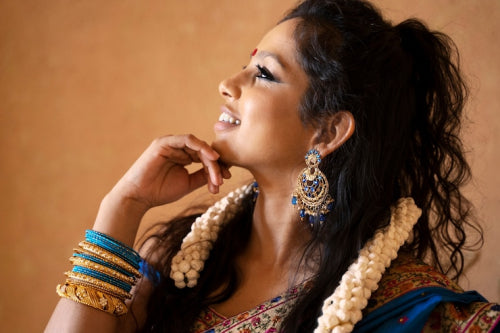
What's behind this renaissance? Traditional designs are being reimagined for today's tastes. Temple jewelry, with its intricate deity-inspired patterns, now graces minimalist lehengas, creating a striking contrast. Meenakari, celebrated for its vivid enamel work, appears on sleek cuffs that pair effortlessly with fusion outfits. Kundan, once reserved for opulent bridal sets, is crafted into delicate pieces for evening wear. Tribal silver, often from Madhya Pradesh's skilled artisans, brings a rustic charm to contemporary looks. The state's tribal crafts, including Dhokra metalwork and bamboo artistry, are emblematic of this blend, their organic forms appealing to eco-conscious consumers seeking authenticity.
Sustainability is a powerful driver. Millennials and Gen Z are turning away from fast fashion, favoring ethically sourced, locally crafted jewelry. IndieHaat's artisans, many from rural communities, use recycled precious metals and natural gemstones, aligning with global demand for greener luxury. The global jewelry market, estimated at $353.26 billion in 2023, is expected to reach $482.22 billion by 2030, with a 4.7% CAGR, fueled by innovative, sustainable designs. In India, where jewelry is both a cultural staple and a personal statement, this shift resonates deeply.
Personalization is another trend. Festival-goers are embracing mix-and-match styling, layering delicate anklets with bold chokers or stacking oxidized rings with gemstone studs. This approach allows for curated, individualistic looks, a trend IndieHaat amplifies with collections designed to inspire creativity and experimentation.
Artisans at the Forefront
This revival is as much about people as it is about aesthetics. In Madhya Pradesh, artisans practice Dhokra, an ancient lost-wax casting technique that turns molten brass into intricate pendants. In Rajasthan, women meticulously hand-paint meenakari designs, preserving a craft handed down through generations. IndieHaat serves as a vital link, connecting these makers to a global audience. At a recent Mumbai fashion show, a designer's collection featuring IndieHaat's tribal silver necklaces drew accolades for its raw elegance. Bollywood stars have also embraced kundan and temple jewelry, boosting their visibility on red carpets and social media.
Real-world stories add depth. A Hyderabad bride paired her silk saree with an IndieHaat temple jewelry set, later sending the artisan a heartfelt note of gratitude. Instagram influencers are amplifying the trend, styling handmade pieces for Navratri garba nights or Diwali gatherings, their posts sparking widespread interest. These moments highlight jewelry's ability to bridge wearer, maker, and tradition, creating a shared narrative of cultural pride.
Navigating Challenges
The path forward isn't without obstacles. Handmade jewelry competes with machine-made alternatives that dominate markets with low-cost, uniform designs. The Indian costume jewelry market, valued at $1,788.6 million in 2019, is projected to reach $2,126.3 million by 2027, with an 80% surge in demand driven by affordable pieces inspired by television trends. These items, while popular among budget-conscious buyers, lack the artistry and longevity of handmade work.
Logistics present another hurdle. The festive season's demand spikes strain supply chains, challenging artisans to scale production without compromising quality. Price sensitivity in smaller cities, where handmade jewelry's cost can deter buyers, adds complexity. Additionally, a knowledge gap persists: many younger consumers, swayed by global brands, are unfamiliar with the labor-intensive processes behind kundan or Dhokra. Platforms like IndieHaat must invest in storytelling to educate buyers and highlight the value of these crafts.
Seizing Global Opportunities
The opportunities, however, are vast. The Indian jewelry market, valued at $87.82 billion in FY2024, is expected to nearly double to $195.35 billion by FY2032, with a 10.51% CAGR. E-commerce is transforming the landscape, enabling artisans to reach international markets, particularly the Indian diaspora celebrating festivals abroad. IndieHaat's global orders, including from the U.S., where the jewelry market is set to grow at a 4.1% CAGR through 2030, reflect this potential.
The social impact is profound. By empowering rural women artisans, IndieHaat is preserving endangered crafts and fostering economic independence. Innovative models, such as jewelry rentals or styling consultations, are emerging, catering to consumers seeking variety without long-term investment. IndieHaat could capitalize on this by offering festive styling kits, pairing jewelry with outfit recommendations to enhance the shopping experience.
Charting the Future
As India's festive season unfolds, handmade jewelry is not merely a trend but a cultural movement. Artisans on IndieHaat stress the importance of storytelling, urging platforms to showcase the human stories behind each piece. Industry experts view this revival as part of a broader shift toward mindful fashion, where quality, heritage, and sustainability take precedence. “These pieces are more than adornment,” an artisan shared. “They're fragments of our history, worn with purpose.”
For consumers, choosing handmade jewelry is an act of defiance against a homogenized world. It honors the metalworker in Bastar, the enamel artist in Jaipur, the silversmith in Bhuj. As fireworks light up Diwali skies and garba circles spin, these pieces will gleam not just for their beauty, but for the legacy they embody. IndieHaat, with its carefully curated offerings, invites us to wear that legacy, ensuring it thrives for generations to come.
Disclaimer: The above helpful resources content contains personal opinions and experiences. The information provided is for general knowledge and does not constitute professional advice.
You may also be interested in: Top 10 Navratri Outfit Ideas for 2024: Traditional & Modern Styles
Fast fashion erodes cultural heritage, sidelining artisans and reducing traditions to trends. At IndieHaat, we champion India's craftspeople with handcrafted sarees, apparel, décor, and skincare rooted in authenticity. Each piece embodies skill and ethical care. Support artisans and preserve India's timeless legacy Shop Now!
Powered by flareAI.co